Stromata research article
Mount Athos without the postcard: the history of the Holy Mountain and a route into silence
A major Stromata study of the Holy Mountain: from Ouranoupoli and Karyes to the Great Lavra, Kerasia, and the Skete of Saint Anna.
Editor: Mercury Gudym
Mount Athos begins not with ancient walls, but with a border. A person receives the diamonitirion in Ouranoupoli, boards a ship, and crosses not only the sea but also a different regime of time: from a secular coastal town into a space where rules shaped in the Byzantine era still operate, and where law, worship, and everyday life are bound together more tightly than in most places in contemporary Europe.
Yet Athos matters not only for church people. It is one of the few living worlds where history does not turn into a museum. The monasteries here are not simply “monuments,” but active communities. Ancient rules have not been replaced by decorative tradition. A conversation about silence, power, memory, labor, and human searching does not sound abstract here.
This article is intended neither as a pilgrim brochure nor as a retelling of “miracle stories.” Its task is to show Athos as a complex civilization: geographical, spiritual, political, artistic, and human. It then follows a concrete route, from the Russian Panteleimon Monastery and coastal Xenophontos to Karyes, the Great Lavra, Kerasia, and the Skete of Saint Anna, in order to understand why the Holy Mountain still attracts, unsettles, inspires, and raises questions.
How to read this text
- This is not a practical travel guide. It does not contain ferry timetables, prices, accommodation booking advice, or practical instructions.
- This is a historical and cultural study. Its main task is to help the reader see the meaning of the places included in the route.
- Tradition and history are kept distinct. Where the text speaks about church tradition, wonderworking icons, or early legends, it explicitly notes that this is tradition, not a documentarily verifiable fact.
- Athos is considered without romanticization. The silence of the Holy Mountain does not exist outside power, documents, borders, national histories, and human conflicts.
- The route is built dramaturgically. It moves from the secular threshold and the great monasteries toward the hidden Athos of cells, sketes, and personal silence.
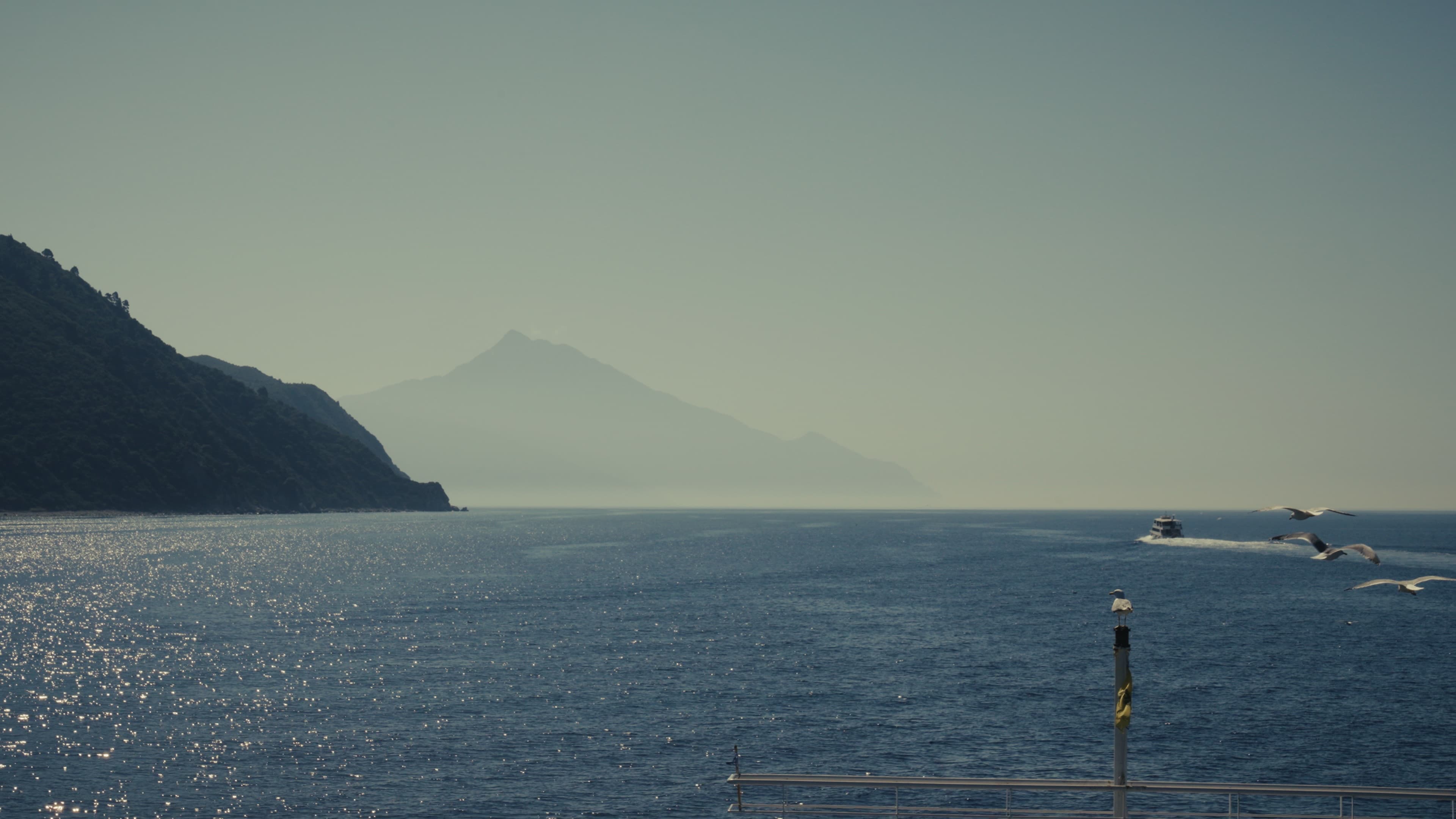
Table of contents
Open table of contents+
Athos as place, history, and special status
Geography and early monasticism
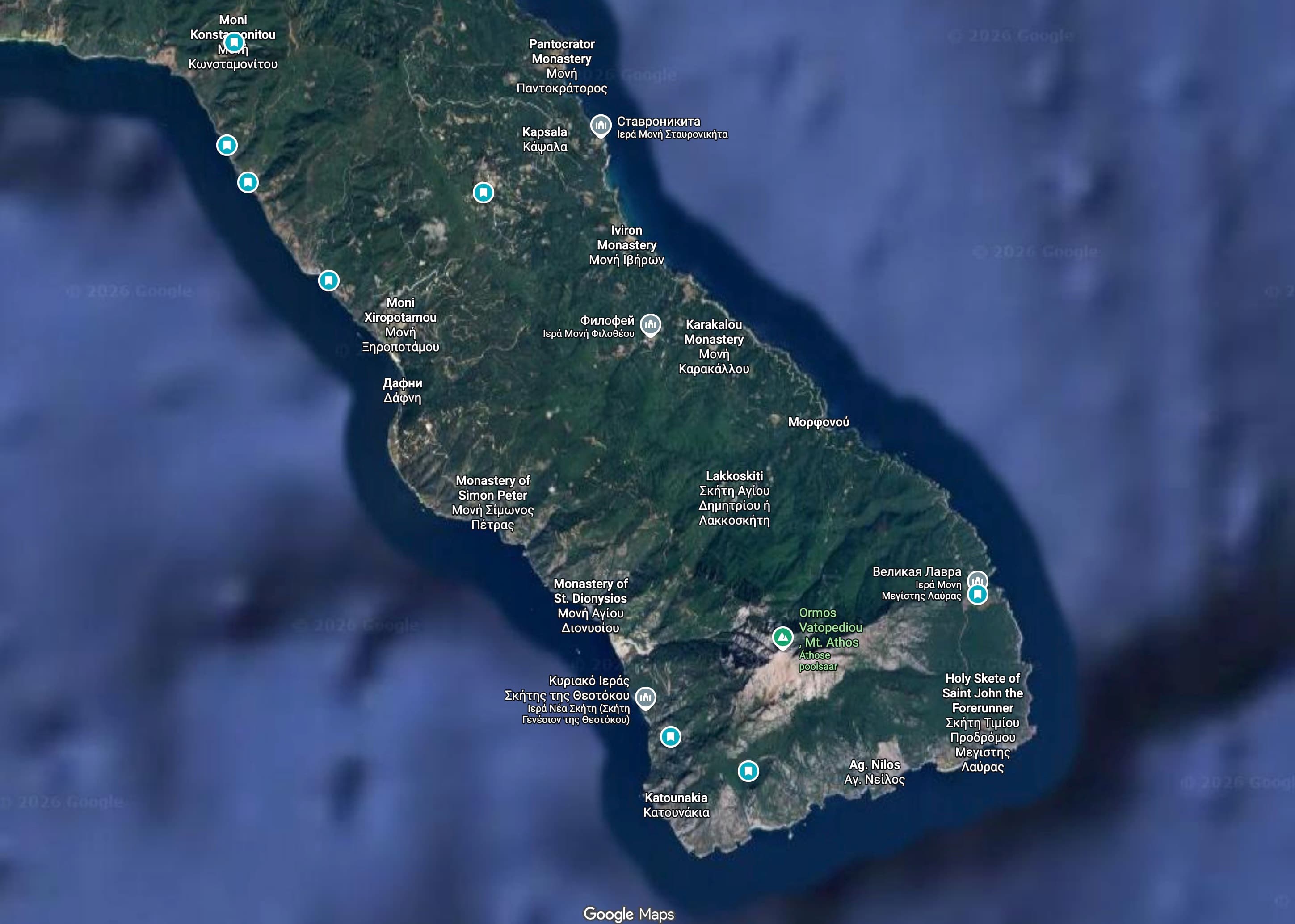
Geographically, Athos is the eastern “finger” of Chalkidiki, a mountainous peninsula stretching into the Aegean Sea, roughly 50 to 60 kilometers long and 7 to 10 kilometers wide. Its peak rises to 2,033 meters. It is at once a mountain, a coastline, a forested massif, and a system of hard-to-reach slopes, where the very topography encouraged not urban life, but withdrawal.
An early monastic presence on Athos can already be glimpsed in late Byzantine and hagiographic testimonies about hermits of the late eighth and ninth centuries, but the sources for this period are fragmentary and in places late. A cautious formulation is therefore this: the first hermits probably appeared on Athos no later than the ninth century, while the clearly traceable institutional history of the Holy Mountain begins in the tenth century and gains particular force after the foundation of the Great Lavra.
This distinction matters. Athos did not appear all at once as a “monastic republic” with twenty monasteries, a rule, representation, and an administrative center. At first it was a space of withdrawal, scattered asceticism, small communities, and personal spiritual struggle. Later, this desert energy entered a more organized form.
The Great Lavra and the birth of the Athonite system
The key figure in this turning point is Saint Athanasius the Athonite. Founded by him in 963 with the support of the future emperor Nikephoros II Phokas, and later John Tzimiskes, the Great Lavra became the first large cenobitic monastery on Athos.
This was not simply the construction of another monastery. The Great Lavra changed the scale of monastic life. If early Athos tended toward an ascetic sparsity, the Lavra offered another image: common life, a rule, architecture, economy, a library, workshops, the distribution of obediences, and a shared form of existence.
This change was not without conflict. Some of the older ascetics regarded Athanasius’ project as too large and too “world-ordering” for a mountain that had previously leaned toward desert life. Complaints by Athonite monks to the emperor, and the subsequent formulation of rules, show that the birth of organized Athos was both a spiritual and an institutional revolution.
Karyes, the Koinot, and the Protaton
In the tenth and eleventh centuries, the Athos still recognizable today began to take shape. The first typikon of 972 became the foundation of the Holy Mountain’s special order, and the typikon of Constantine IX Monomachos in 1046 confirmed essential elements of its internal structure.
Today, the special status of Athos is confirmed by Article 105 of the Constitution of Greece. Athos is a self-governing part of the Greek state, spiritually subject directly to the Ecumenical Patriarchate of Constantinople. Its administration is carried by twenty monasteries; their number and hierarchical order cannot be changed. The representatives of the monasteries form the Holy Koinot, while executive functions are carried out by the Holy Epistasia.
Karyes, or Καρυές, is not simply a “village in the center.” It is the administrative capital of Athos. Each of the twenty monasteries has its own representation here. The organs of administration are located here, and so is the Protaton, the church of the Protos, the spiritual and symbolic heart of the Athonite system.
In this sense, Athos is not an anarchy of inspired solitary figures. It is a highly complex monastic republic, where prayer is joined to documents, rules, representation, and responsibility.
The portion of the Mother of God and the Avaton
The formula “the portion of the Mother of God” belongs first of all to church tradition. According to Athonite tradition, the Mother of God and the Evangelist John, caught in a storm on their way to Cyprus, came ashore at Athos. After this, Mary asked her Son to grant her this land, and the peninsula became her “garden” or “portion.”
A historian must add a qualification: this is not a documented fact of the Byzantine period, but a theologically and culturally significant tradition through which Athos describes its own identity.
Connected with this is the Avaton, the prohibition on the entry of women. Historically, it is embedded in the rule tradition, including the typikon of 1046. In contemporary practice, this rule functions both as law and as part of Athonite self-understanding. Within monasticism, it is explained both by the discipline of celibacy and by the symbolic idea that the only “female” figure present on Athos is the Mother of God herself.
At the same time, in modern humanities scholarship the Avaton remains a subject of tense discussion. Some see in it the core of Athonite identity; others see a painful conflict between living religious tradition and contemporary ideas about access to heritage.
Athos under empires and states
Under Ottoman rule, Athos did not disappear, but lived within a much more complex regime: through privileges, taxes, dependence on external patrons, and a network of monastic estates. After the fall of Constantinople, it did not cease to be one of the principal centers of Orthodoxy.
In the twentieth century, Athos experienced its incorporation into the Greek state, the ratification of a new charter, the painful history of the alienation of metochia for the settlement of refugees, and in our own time it continues to live as an international monastic space where Greek, Serbian, Bulgarian, Russian, and other traditions exist side by side.
The Russian presence on Athos is a separate topic. It is measured not in decades, but in almost a millennium: from early Russian settlements and Xylourgou to the larger story of the Panteleimon Monastery. Yet it is important not to reduce this history to the formula “Russian Athos.” The ethnic identity of the Panteleimon Monastery changed, and the distinction between Russian and Ukrainian monks in nineteenth and twentieth-century sources was often smoothed over or ideologically redefined. It is therefore more accurate to speak not of a “purely Russian” or “purely imperial” face of Athos, but of a complex East Slavic trace within a broader Orthodox world.
Ouranoupoli as the secular threshold of the Holy Mountain
Today, for most pilgrims, the road to Athos begins in Ouranoupoli. It is here that the branch of the pilgrimage office operates, issuing the already approved diamonitirion, and it is from here that boats depart for Dafni and the coastal monasteries. This practical function makes Ouranoupoli not simply a settlement near the border, but a ritual antechamber of the Holy Mountain.
Historically, modern Ouranoupoli grew on the site of Prosforion, a metochion of the Vatopedi Monastery. The Vatopedi tradition calls Prosforion one of the oldest known metochia of the monastery and links it with the territory of present-day Ouranoupoli. The archaeological services of Greece confirm that the tower of Ouranoupoli belonged to this metochion and that the fortified complex is attested at least from the eleventh to fourteenth centuries, with reconstructions continuing into the nineteenth century.
The most important twentieth-century story here is connected with the refugees after the Asia Minor Catastrophe. The simplified version, “the state asked Athos for land, and the monks generously yielded it,” corresponds only partially to reality. The process included requisitions, the leasing of metochia to the Greek state, compulsory expropriations, and later attempts at compensation.
That is why contemporary Ouranoupoli is important as a symbol of the border in a double sense. It stands on former Athonite land, but is not Athos; it was born from monastic economy, but became a secular coastal point of entry; it is connected with pilgrimage, but took shape as a refugee settlement and later as a tourist node.
This paradox already contains the whole nerve of the Athonite theme: the Holy Mountain never existed outside the history of empires, wars, human displacement, and decisions of the state.
The route through monasteries, cells, and sketes
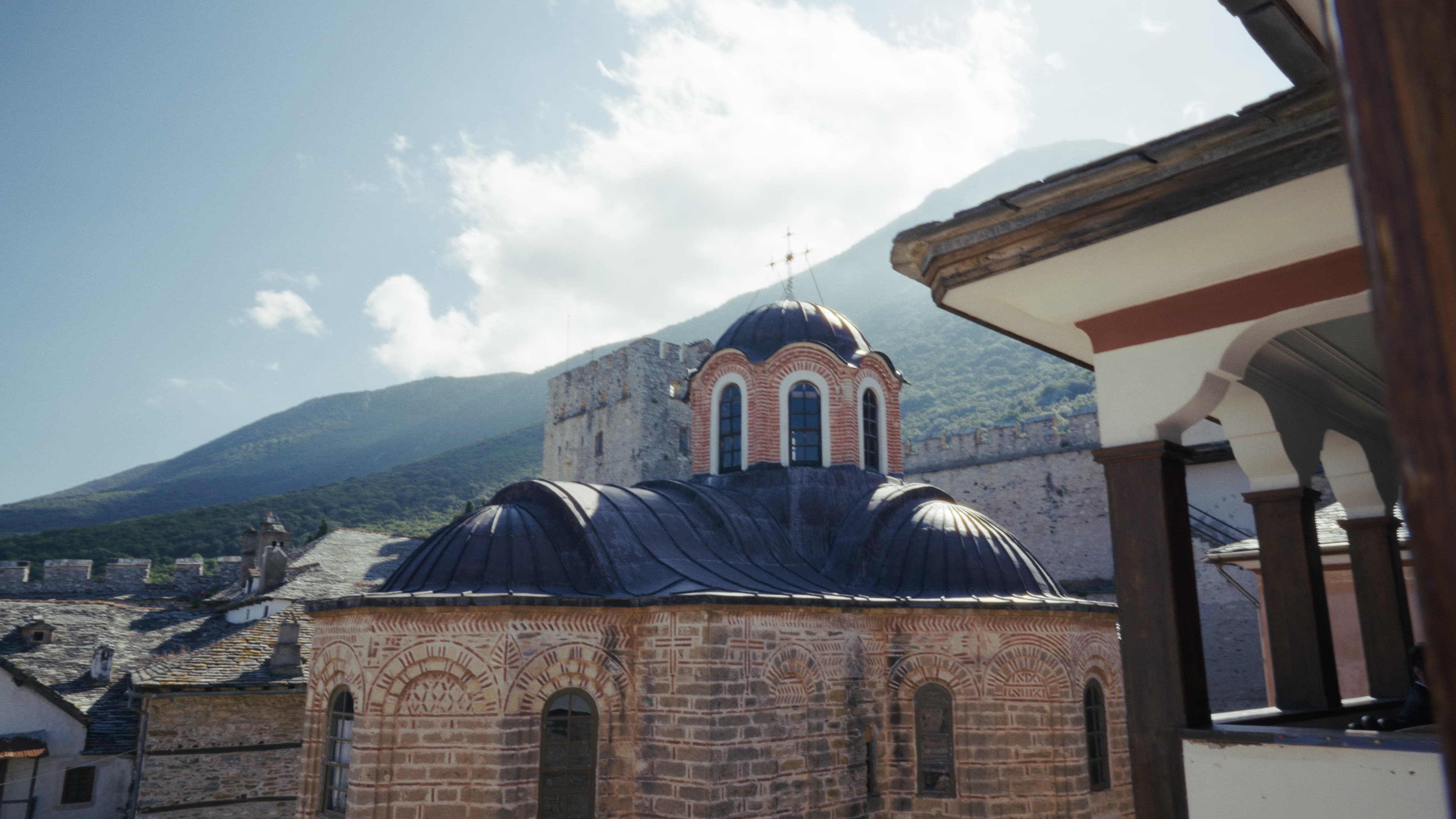
Our route matters precisely because of its dramaturgy. It begins at the maritime facade of Athos, passes through large coastal monasteries and the administrative heart of Karyes, then shifts toward the source of Athonite history, the Great Lavra, and after that moves toward a stricter and more hidden Athos: Kerasia and the Skete of Saint Anna.
It is a path from the visible to the invisible. From walls, domes, and piers to small points of hesychia, where all external architecture exists for the sake of the inner gathering of the human person.
Panteleimon Monastery, Ιερά Μονή Αγίου Παντελεήμονος
Type: sovereign monastery Location: southwestern coast between Xenophontos and Dafni Hierarchy: 19th place among the twenty monasteries Main theme: the East Slavic trace on Athos without imperial romanticization
The Panteleimon Monastery is often called the “Russian face of the Holy Mountain,” but that formula is too simple for its real history. Yes, Russian presence became especially visible here. Yes, this monastery became the principal symbol of Athos’ connection with East Slavic Orthodoxy. But its biography is not a straight line from “Rus” to “Russia.”
The history of Panteleimon includes early Russian settlements, the Byzantine context, changes in ethnic composition, struggles for influence, imperial money, monastic crises, and a new restoration already in the post-Soviet period. The modern coastal ensemble of the “Russikon” took shape from the late eighteenth century to the first third of the nineteenth century after the move from an older inland site known as Palaiomonastiro. Sources differ on the exact dating of the phases of the present complex, so it is safer to speak of the turn of the eighteenth and nineteenth centuries.
Panteleimon is important not because it is “Russian,” but because it shows that Athos has always been larger than one nation and one state. Here a monastery becomes a place of prayer, but also a platform of memory, church politics, symbolic representation, and historical dispute.
Strong phrase: The Russian trace on Athos begins not with politics, but with long monastic memory.
Photo captions:
- Panteleimon from the sea: a monastery where the East Slavic history of Athos became especially visible.
- The green domes of the “Russikon”: a late coastal ensemble on the site of centuries of memory.
- Not an “imperial symbol,” but a living monastery with a difficult and shifting identity.
Xenophontos, Ιερά Μονή Ξενοφώντος
Type: sovereign monastery Location: southwestern coast Hierarchy: 16th place Main theme: the Athonite rhythm of rising, loss, and restoration
Xenophontos is not as loud in the popular imagination as Panteleimon or the Great Lavra, but precisely this makes it valuable for the route. It stands by the sea, is linked with an ancient account of Saint George, and carries within itself a deeply Athonite dramaturgy: early foundation, imperial donations, growth, pirate attacks, Ottoman weariness, return to the cenobitic order, and new construction.
The official website of the monastery places its formation at the end of the tenth century, before 998, and connects its name with the first abbot, Xenophon. The same tradition speaks of an earlier small monastery of Saint Demetrios, built by Saint Xenophon the Senator.
Xenophontos is important not merely as “another coastal monastery.” In its history, three things characteristic of Athos come together: the veneration of a holy image as a foundation of memory, the dependence of monasteries on patronage, and the ability to live through periods of near-total weakening in order to gather again as a community.
Strong phrase: Xenophontos reminds us that Athos spent centuries learning how to recover.
Photo captions:
- Xenophontos: the maritime facade of a monastery that has lived through both flourishing and decline.
- Saint George as a center of memory: a monastery that grew around an image and a tradition.
- The silence of the shore and the large katholikon: one of Athos’ unexpected combinations.
Docheiariou, Μονή Δοχειαρίου
Type: sovereign monastery Location: western coast, near Xenophontos Hierarchy: 10th place Main theme: tradition, labor, and strict monastic form
Docheiariou is one of those Athonite monasteries where sea and tradition meet almost directly. Even its name refers to a monastic economic office: δοχειάρης, the keeper of stores. In pilgrimage and historical texts, this name is connected with Euthymios, a disciple of Athanasius the Athonite, who is regarded as the first founder. This explanation fits well within the monastic tradition, but formally remains a reconstruction.
The main holy object of Docheiariou in pilgrim consciousness is the icon of the Mother of God “Gorgoepikoos,” or “She Who Is Quick to Hear.” Here it is especially important to distinguish history from tradition. It can be said with confidence that the monastery links its special identity with this icon and that, in the monastic tradition, the miraculous event involving the monk Neilos is dated to 1664. But the miracle itself should be presented not as a “proven fact,” but as part of living monastic tradition.
The present katholikon is connected with the major restoration of 1568, supported by the Moldavian ruler Alexandru Lăpușneanu. Docheiariou is therefore important not only because of its wonderworking icon, but also as a place where one can clearly see how a monastery builds its memory in three registers at once: in rule, in walls, and in narrative.
Strong phrase: Docheiariou is Athos where even miracle is built into strict form.
Photo captions:
- Docheiariou: the monastery of the Archangels, where an economic term became the name of a monastic community.
- “She Who Is Quick to Hear” is not a newspaper sensation, but centuries-old monastic tradition.
- The western shore of Athos: stone, sea, and the austere plasticity of space.
Konstamonitou, Ιερά Μονή Κωνσταμονίτου
Type: sovereign monastery Location: a forested part of the peninsula, away from the best-known coastlines Hierarchy: 20th place Main theme: hidden endurance and memory without spectacular representation
Konstamonitou is a monastery that almost resists journalism. There are fewer loud stories about it than about the Lavra or Docheiariou; its origin breaks apart into several versions; its early history is poorly illuminated by documents.
Some traditions trace its foundation to Constantine the Great and his son Constans; others to a monk from Kastamon in Paphlagonia or to the Byzantine Kastamonites family. A more cautious formulation is this: the fourth century belongs to monastic tradition, while the documented foundation confidently belongs to the eleventh century.
It is precisely this uncertainty that makes Konstamonitou important for an honest conversation about Athos. The Holy Mountain lives not only by great centers and powerful names, but also by such barely visible monasteries, where memory is sustained not by effect, but by the continuation of life.
Konstamonitou is Athos without a pose: remoteness, forest, modesty, persistence.
Strong phrase: Not everything important on Athos likes to be visible.
Photo captions:
- Konstamonitou: a monastery whose restraint speaks louder than legends.
- Last in the hierarchy, but not last in meaning.
- The forested Athos: not facade, but the inner depth of the Holy Mountain.
Karyes, Καρυές
Type: administrative center Main theme: Athos as order, not a chaos of hermits
Karyes is the nervous system of Athos. There are fewer “postcard views” here than at the coastal monasteries, but it is precisely from here that one understands the Holy Mountain is not a romantic archipelago of separate shrines, but a republic with a carefully formed internal structure.
Karyes is documented as an organized settlement already from the ninth century and remains the capital of Athos, where the Holy Koinot and the organs of daily administration are located. Each of the twenty monasteries has its own representative house here, a konak.
The main church of Karyes is the Protaton. Studies of its architecture date the present main form of the church to the 960s, while later tradition links the famous frescoes with Manuel Panselinos; academic literature usually uses the cautious word “attributed.”
Here, too, is kept the icon of the Mother of God “Axion Estin,” “It Is Truly Meet.” Church tradition dates the miracle of the archangel’s appearance and the lines of the hymn to 982, but the first known written account of the story was published by Nikodemos the Hagiorite in 1799 on the basis of an earlier, supposedly sixteenth-century, memorandum. What stands before us is not a journalistic “fact of a miracle,” but a strong Athonite tradition with later written fixation.
Strong phrase: Karyes is the place where Athonite silence takes the form of law and rhythm.
Photo captions:
- Karyes: the place where Athos governs itself.
- The Protaton is not simply an ancient church, but a center of Athonite self-understanding.
- “Axion Estin”: a tradition that became the heart of common Athonite veneration.
The Great Lavra, Μονή Μεγίστης Λαύρας
Type: sovereign monastery Hierarchy: 1st place Date of foundation: 963 Main theme: the transformation of a mountain of hermits into a monastic civilization
If one were to look for a single point through which the whole of Athos could be explained, it would be the Great Lavra. Not because it is the largest or the first in the list, but because it was here that the ascetic mountain was transformed into a monastic civilization.
Athanasius the Athonite, together with imperial support, brought a new scale of life to the peninsula: rule, center, economy of forces, architecture, and a way of shared existence. The katholikon of the Lavra became a model for later Athonite architecture, and the monastery itself became a model of organized cenobitic monasticism.
But the Lavra is also important because it did not destroy the older Athonite ideal, but entered into dispute with it. Tenth-century documents show that the figure of Athanasius irritated some of the early ascetics, while the typikon of 972 was, among other things, a way to regulate this tension.
The Great Lavra is therefore a key to understanding Athos as an inner conflict between solitude and common order. On the Holy Mountain, neither side simply defeated the other. What prevailed was their difficult coexistence: alongside the Lavra, sketes, cells, the deserts of Karoulia, and the whole world of small points of silence continued to exist.
Strong phrase: Without the Great Lavra, it is impossible to explain what Athos is.
Photo captions:
- The Great Lavra: the place where Athonite history entered an organized form.
- The first great katholikon of the Holy Mountain and a model for later monasteries.
- The Lavra is not only grandeur, but also the memory of a dispute between desert and common life.
Kerasia and the Cell of the Honorable Forerunner, Ιερόν Κελλίον Τιμίου Προδρόμου, Κερασιά
Type: district of cells and small secluded monastic life Connection: possessions of the Great Lavra Main theme: the hidden Athos of small forms of hesychia
Usually, when a person says “Athos,” they imagine monasteries with towers and maritime facades. Kerasia breaks this picture. Here Athos becomes almost invisible: not a fortress, but a scattered network of cells, where life narrows to a few rooms, a small church, manual labor, and a rule of prayer.
Kerasia belongs to the possessions of the Great Lavra and is located above the Kavsokalyvia massif. Reference descriptions call it an area of cells at an elevation of about 700 meters. Small monastic houses are concentrated in this area, usually for one to three people, each with its own church and a small plot of land.
For the reader, this is an important place because it allows the different forms of Athonite life to be explained. A monastery is a large sovereign community; a skete is an organized community dependent on a monastery, an intermediate form between monastery and desert; a cell is a house with a small church for a few monks; a kalyva is an even smaller dwelling, usually within a skete network; a hesychasterion is an extremely secluded form of eremitic dwelling.
There is little information in accessible sources about the specific Cell of the Honorable Forerunner in Kerasia. It is confirmed that the modern cell of Saint John the Forerunner was restored in 2003 on the site of an older small dwelling of the same name. And that is enough to understand its meaning: Kerasia is important not because of the biography of a “large monastery,” but because it shows the hidden layer of Athos.
If the Lavra shows monastic civilization in its gathered form, Kerasia shows another truth of Athos: all this vast structure is ultimately built for the possibility of withdrawing into smallness, where almost nothing shelters a person from himself.
Strong phrase: Kerasia shows why large monasteries are needed at all: so that it may become possible to become small.
Photo captions:
- Kerasia: the Athos that is almost invisible from the sea and the map.
- A cell is a small form of monastery and a great form of silence.
- Here the Holy Mountain stops being a panorama and becomes a personal space of prayer.
The Skete of Saint Anna, Σκήτη Αγίας Άννης
Type: skete dependent on the Great Lavra Location: southwestern slopes of Athos Main theme: skete life between monastery and desert
The Skete of Saint Anna shows the side of Athos that cannot be reduced to a beautiful landscape. Yes, it stands in one of the most powerful landscapes of the Holy Mountain. But the meaning of this place lies not in the “view,” but in the effort of the path, the difficulty of ascent, and the skete measure of life, where a person is not yet alone like a hermit, but is no longer inside the large mechanism of a monastery.
Official and church descriptions call it the oldest and largest skete of Athos. As an organized community, it took shape around the middle of the seventeenth century. It is located in an extremely dramatic relief, and the geography itself already determines its image: one does not merely arrive here; one ascends.
The skete is dedicated to Saint Anna, the mother of the Mother of God. In later tradition and reference descriptions, it is stated that in 1686 a venerated relic of Saint Anna was brought here. This account is widely repeated in church and Athonite summaries, but for a strict presentation it is more accurate to formulate it as a stable monastic tradition. The relic itself unquestionably occupies a central place in the contemporary veneration of the skete.
The story that Saint Anna’s relics allegedly had to be closed or protected because pilgrims tried to remove particles should not be used in the main article: there is no reliable confirmation for it yet in official, academic, or clearly source-critical materials.
Saint Anna holds the middle between community and solitude. That is why it explains especially well that Athos can be not only a strict structure, but also a school of gradual withdrawal from noise.
Strong phrase: Saint Anna is Athos as path, effort, and height.
Photo captions:
- The Skete of Saint Anna: Athos felt in the legs and in the breath.
- Between monastery and desert: this is what the skete form of life looks like.
- Height, difficulty of the path, and silence are the three main words of this place.
Recurring themes of the route
Athos as border
Ouranoupoli, the pilgrimage office, the diamonitirion, the ship, registration in Karyes: the entire route reminds us that Athos begins not with inspiration, but with the rules of crossing a border. This does not cancel the spiritual meaning; it makes it denser. A person enters not an abstract “atmosphere,” but a concrete order.
Visual pause: the port of Ouranoupoli, the counter of the pilgrimage office, the departure of the ship, the first monasteries from the sea.
Hermit and monastery
Early Athos leaned toward the desert, but with the Lavra there appeared the form of an organized community. This theme is unfolded by the Great Lavra, Kerasia, and the Skete of Saint Anna: from the large cenobitic monastery to the intermediate skete and then to the small cell.
What matters here is not a contrast between “right” and “wrong,” but the tension between two models of asceticism. Athos is held together by their coexistence.
Prayer as invisible work
An outside observer can easily see stone, icons, sea, and relief. It is harder to understand the meaning of the daily rule. Yet the entire Athonite space is ordered precisely around invisible work: services, repetition, obedience, craft, reading, silence.
Visual pause: cells, workshops, early morning, meal, empty paths.
The Mother of God and male territory
This is perhaps the main Athonite paradox: a place calls itself the “Garden of the Mother of God,” yet does not admit women. For some, this is an organic part of the internal logic of the monastic world; for others, it is a painful question about the boundaries of tradition.
Karyes with the icon “Axion Estin,” Docheiariou with “Gorgoepikoos,” and the broader theme of the Avaton provide strong material not only for the text, but also for a future interview.
Athos and power
Emperors, Ottoman taxes, the Greek constitution, the pilgrimage regime, the alienation of metochia for the settlement of refugees, Russian influence in the nineteenth century: all of this shows that the silence of Athos never existed in a vacuum.
The Great Lavra, Panteleimon, and Ouranoupoli reveal this theme especially well.
The Russian trace without romanticization
Panteleimon is the most obvious entry into this theme, but it is important to speak historically rather than in slogans: about the East Slavic presence, about shifting identities, about tensions around national representation.
What works most strongly here is not geopolitics, but personal experience: how a person encounters a monastery, memory, and his own expectations.
Beauty and silence
Athos is highly photogenic, but this is precisely the risk: to turn it into a landscape. The route Great Lavra, Kerasia, Saint Anna helps avoid this trap.
Beauty is not canceled here, but its meaning is revealed only when it becomes clear what all this is for: not for the frame, but for work on oneself.
What Athos says to the human person today
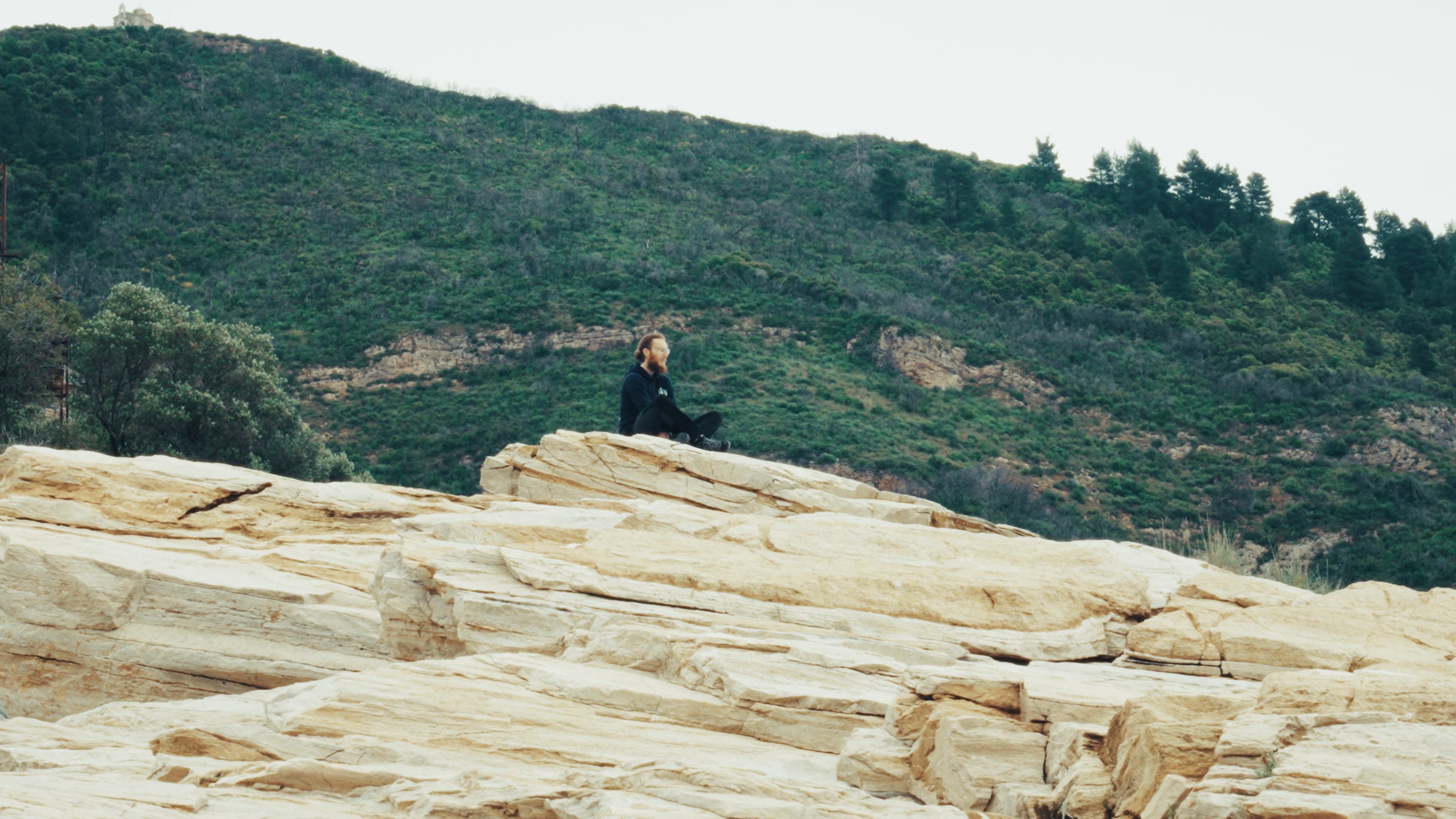
The conversation about Athos matters because it is not simply a conversation about religion or antiquity. Athos forces us to ask again about things the modern person most often pushes to the margins: silence, inner discipline, freedom and its price, memory, the authority of tradition, and the boundary between solitude and escape.
On a relatively small peninsula, twenty monasteries, sketes, cells, and desert points have existed for more than a thousand years, where monasticism is not staged for the visitor but continues as a way of life.
But precisely for this reason, Athos evokes not only admiration. It poses uncomfortable questions: about closure, the Avaton, the role of national traditions, the relationship between shrine and politics, and whether the modern person can understand at all a world built not around self-expression, but around self-limitation.
Athos gives no simple answer. It does not say to the modern person: “return to the past.” It shows that the human person has a deeper problem than a lack of information, entertainment, or opportunities. The problem is that the inner center easily dissolves in noise.
The Holy Mountain matters not because everyone should live like monks. It matters because it reminds us that a life without measure, without silence, without memory, and without inner work gradually loses its form. And perhaps the sharpest question Athos asks today is this:
A short chronology of Athos
- Late eighth to ninth century: early hermits appear on Athos; the exact dating is fragmentary, but early eremitic life is suggested by the sources.
- Tenth century: Karyes takes shape as an organized center of monastic life.
- 963: Athanasius the Athonite founds the Great Lavra.
- 972: the first Athonite typikon under John Tzimiskes.
- 1046: the typikon of Constantine IX confirms key elements of the order and the Avaton.
- Eleventh century: the documented formation of a number of the oldest monasteries, including Xenophontos, Docheiariou, and Konstamonitou.
- Fourteenth century: many monasteries reach maturity, but also experience raids and crises.
- After 1453: Athos retains its importance as one of the principal Orthodox centers even under Ottoman rule.
- Late eighteenth to nineteenth century: major waves of restoration and new construction, including at Panteleimon and Xenophontos; the Russian factor on Athos grows stronger.
- 1923–1932: the Greek state carries out requisitions, leases, and compulsory expropriations of Athonite metochia for the settlement of refugees after the Asia Minor Catastrophe.
- 1926: the Greek state ratifies the constitutional charter of Athos; its special status is confirmed at the constitutional level.
- Late twentieth to early twenty-first century: after a period of general weakening, monastic life on Athos strengthens again; the communities preserve their international character.
A short glossary
Avaton
The prohibition on the entry of women into the territory of Athos. In Athonite tradition, it is connected with monastic discipline and the understanding of the Holy Mountain as the “portion of the Mother of God.”
Diamonitirion
A permit to visit Athos. Without it, a pilgrim cannot officially enter the territory of the Holy Mountain.
Katholikon
The main church of a monastery.
Karyes
The administrative center of Athos, where the Holy Koinot, the Protaton, and the representations of the twenty monasteries are located.
Cell
A small monastic dwelling with a church, usually for one or several monks. It depends on one of the monasteries.
Koinot
The Holy Koinot is the representative body of the twenty Athonite monasteries.
Lavra
A large monastery. On Athos, the Great Lavra is the first and principal monastery, founded by Athanasius the Athonite in 963.
Metochion
A possession or dependency of a monastery outside the main territory of the monastery. Metochia could function as economic, agricultural, and representative centers.
Protaton
The main church of Karyes and the most important symbolic center of Athonite administration and liturgical life.
Skete
A community dependent on a monastery, an intermediate form between a large monastery and secluded eremitic life.
Typikon
A rule regulating liturgical, monastic, and administrative life.
Ouranoupoli
A town at the border of Athos, the contemporary point of entry to the Holy Mountain for most pilgrims.
Hesychia
Silence, stillness, inner gathering. In Orthodox monastic tradition, it is connected with prayer and ascetic life.
Sources and materials
Materials listed in the source editorial file:
Official and Athonite sources
- Hellenic Parliament. The Constitution of Greece, Article 105. https://www.hellenicparliament.gr/UserFiles/f3c70a23-7696-49db-9148-f24dce6a27c8/THE%20CONSTITUTION%20OF%20GREECE.pdf
- UNESCO World Heritage Centre. Mount Athos. https://whc.unesco.org/en/list/454/
- ICOMOS. Evaluation for UNESCO inscription of Mount Athos. https://whc.unesco.org/document/153517
- Mount Athos Center / Αγιορειτική Εστία. Visit Mount Athos. https://www.agioritikiestia.gr/en/visit-mount-athos
- Mount Athos Center / Αγιορειτική Εστία. Materials on compulsory leases and expropriations of Athonite metochia. https://www.agioritikiestia.gr/en/proceedings-of-the-one-day-conference-on-compulsory-leases-expropriations-of-the-athonite-metochia-in-greek
- Holy Monastery of Vatopedi. Materials on metochia in Greece and Prosforion. https://www.vatopedi.gr/en/i-moni/istoria-i-m-vatopediou/metochia/metochia-stin-ellada/
- Official site of Xenophontos Monastery. https://www.imxenophontos.eu/
- Holy Cell “Axion Estin”. https://www.keliaxionestin.com/en/blog/the-icon-and-the-greek-nation/
- Hellenic Ministry of Culture / Odysseus portal. Tower of Ouranoupolis. https://odysseus.culture.gr/h/3/gh351.jsp?obj_id=2367
- Greek UNESCO monuments booklet on Mount Athos. https://greekunescomonuments.s3.eu-central-1.amazonaws.com/wp-content/uploads/2023/03/04_%CE%91%CE%93%CE%99%CE%9F%CE%9D-%CE%9F%CE%A1%CE%9F%CE%A3-%CE%95%CE%9D.pdf
Academic and research sources
- Cambridge Core. Research on Vatopedi metochia and refugee settlement.
- UCL paper on the Avaton debate.
- Nicholas Fennell. Russian Monks on Mount Athos. https://www.mountathosfoundation.org/doc/fennell-panteleimonos-article.pdf
- Nicholas Fennell. Russian Monks on Mount Athos. Book reference. https://books.google.com/books/about/Russian_Monks_on_Mount_Athos.html?id=QklEEAAAQBAJ
- Balkanologie. Article on Greek, Russian and Ukrainian monks on Mount Athos.
- Research on the Protaton church and Athonite architectural history.
- National Hellenic Research Foundation archives and studies on Mount Athos.
Additional reference resources
- Athos Guide: Monastery of Saint Panteleimon. https://athos.guide/en/monasteries/svyatogo-panteleymona
- Visit Mount Athos: H. M. Panteleimonos. https://www.visitmountathos.eu/h.-m.-panteleimonos.html
- Athos Guide: Docheiariou. https://athos.guide/en/monasteries/dohiar
- Athos Guide: Kostamonitou. https://athos.guide/en/monasteries/kostamonit
- Pantokrator Monastery: Sketes and Cells. https://pantokrator.gr/en/mount-athos/monastic-state/sketes-and-cells
- Mount Athos Legacy: Great Lavra and Skete of Saint Anna. https://mountathoslegacy.com/
- Greek Orthodox Archdiocese of America: The Skete of Saint Anna. https://www.goarch.org/-/the-skete-of-saint-anna
- Visit Mount Athos: Daily life. https://www.visitmountathos.eu/daily-life.html