Stromata research article
The Christian understanding of marriage: from creation to crowning
How marriage in the Christian tradition moves from the biblical image of “one flesh” to the ecclesial sacrament, the liturgy of crowning, and the responsibility of shared life before God.
Editor: Mercury Gudym
Lead
The Christian understanding of marriage did not appear in a single moment and cannot be reduced to one formula. It took shape over centuries: from the biblical words about man and woman becoming “one flesh,” through the prophetic language of covenant, Christ’s words about “the beginning,” the Apostle Paul’s reflection on the love of Christ and the Church, the experience of early Christians within the Roman world, the Byzantine development of ecclesial blessing, and the mature liturgical rite of crowning.
For this reason, marriage in Christianity cannot be understood only as a legal contract, a romantic union, or a “traditional family.” It is at once a human reality, an ecclesial event, a school of faithfulness, a path of bodily and spiritual unity, a space of responsibility, and an image of love learning to become greater than itself.
This article is intended as an entry into the topic. It does not resolve all contemporary pastoral questions: divorce, remarriage, cohabitation, mixed marriages, infertility, and sexual ethics require separate studies. But it helps us see the essential point: where the high Christian vision of marriage comes from, why crowning is not a decorative religious addition, and why married life is understood not as the final scene of a love story, but as the beginning of a long path.
How to read this text
- This is not an instruction for a personal family situation and not a canonical consultation.
- Historical facts, liturgical meanings, and pastoral conclusions are deliberately kept distinct here.
- Where the sources are disputed or the development was gradual, the text avoids the formula “it has always been this way.”
- The Orthodox perspective is primary, but Catholic and Protestant approaches are briefly mentioned for contrast.
- Contemporary topics such as civil marriage, remarriage, and cohabitation are identified here as open questions, not closed with a single phrase.
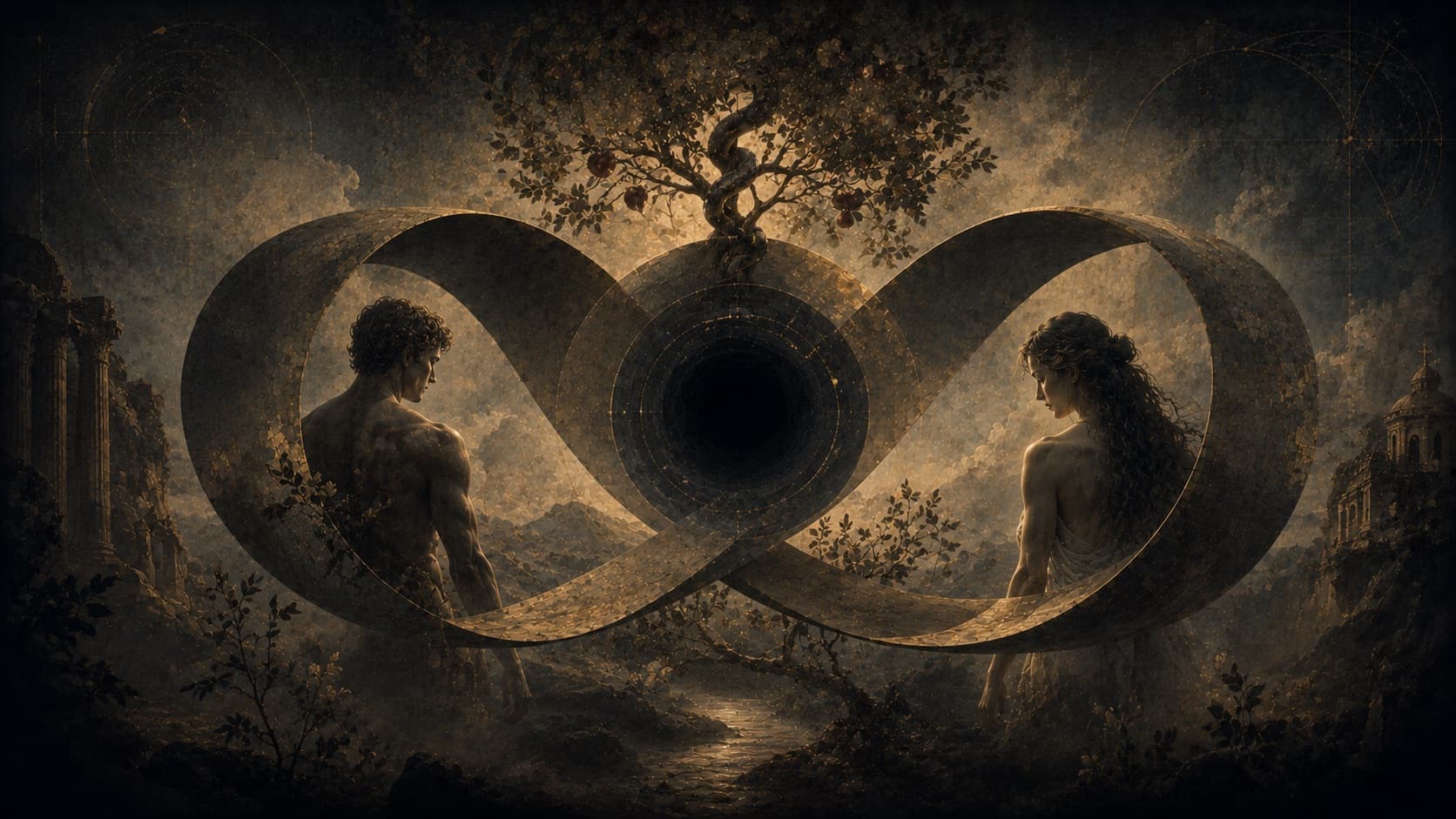
Table of contents
Open table of contents+
Why Christian marriage cannot be reduced to a wedding
In contemporary language, the word “marriage” often moves between three poles. For the state, it is a legally recognized union with rights and obligations. For the culture of romantic love, it is a story of feelings, choice, and compatibility. For everyday consciousness, it is family, home, children, property, care, and daily logistics.
The Christian tradition does not cancel any of these levels. It does not pretend that law, feelings, bodily life, children, home, and social responsibility are unimportant. But it places them within a deeper horizon: marriage becomes not only the union of two people, but a place where human love can be brought into the life of the Church, purified by faithfulness, tested by time, and opened toward God.
This is why Christian marriage does not begin with a beautiful ceremony and does not end on the wedding day. Crowning reveals the meaning of marriage, but it does not replace life itself. If after the rite there is no faithfulness, prayer, labor, mercy, and responsibility, then the symbolism remains an external shell. In the Christian understanding, marriage is not a decorated status, but a path.
On this path there is joy, bodily life, tenderness, children, home, celebration, and beauty. But there is also the cross: the need to die to egoism, to learn to listen, forgive, endure, care, share the weakness of the other, and not turn love into a form of possession. That is why the ecclesial crowning speaks of glory and honor, but at the same time reminds us of martyrial crowns. The spouses enter not a fairy-tale ending, but a shared school of love.
Biblical foundations: creation, covenant, and “one flesh”
Creation: the human person as male and female
The biblical foundation of marriage begins with the account of the creation of the human person. In the Christian tradition, the words of Genesis about man and woman becoming “one flesh” are especially important. This is not only a description of the origin of the family, but also an anthropological image: the human person is created not for closed solitude, but for communion, gift, the recognition of the other, and responsibility before the other.
When Christ speaks in the Gospel about marriage and divorce, He returns the conversation precisely to “the beginning.” This matters: Christ does not build His teaching on marriage only on later legal norms and exceptions. He points to the original design: the union of man and woman should not be an arbitrary contract that can be broken for convenience. It has a depth connected with creation itself.
This biblical depth does not mean that ancient marriage resembled the modern romantic model. The Old Testament knows marriage as part of kinship, household, inheritance, economy, the continuation of life, and responsibility before the family. In ancient Israel, marriage united not only two individuals, but networks of kin, property, future children, and social memory. The biblical language of marriage is therefore always broader than private feeling.
Covenant and faithfulness
The Old Testament speaks of marriage not only through creation, but also through covenant. The prophets use marital language to describe the relationship between God and Israel. The people’s unfaithfulness becomes betrayal, while God’s faithfulness becomes seeking, judgment, mercy, and restoration. This is one of the main bridges to Christian theology of marriage: conjugal faithfulness begins to be perceived not only as a social virtue, but as an image of covenantal faithfulness.
Such language does not romanticize marriage. On the contrary, the prophetic texts know pain, betrayal, jealousy, return, and wound. Marriage becomes an image of love that can be broken and restored, an image of responsibility in which faithfulness is not a mood, but a covenantal form of life.
The Song of Songs and bodily love
The Song of Songs holds a special place. Modern biblical scholarship often reads it as ancient love poetry with vivid bodily and erotic language. But both Jewish and Christian traditions learned very early to read it also symbolically: as speech about the love of God and His people, Christ and the Church, the soul and God.
This is important for the topic of marriage: the Christian tradition does not need to deny bodily love in order to speak of spiritual love. It seeks not to destroy human eros, but to purify it and bring it into a higher language of love. The Song of Songs shows that human love can be concrete, bodily, poetic, and open to symbolic meaning at the same time.
The New Testament: Christ, Cana, and the love of Christ for the Church
Christ returns marriage to “the beginning”
In the New Testament, the conversation about marriage is centered on Christ. When He is asked about divorce, He does not limit Himself to legal casuistry. He returns His listeners to the words about the creation of man and woman and about “one flesh.” This does not remove the full complexity of pastoral situations, but it sets the norm: marriage should not be thought of as a temporary union that a person may break for convenience.
In this way, Christ shows that marriage has not only legal, but ontological depth. It concerns how the human person is created, how one enters into communion, how faithfulness is connected with bodily life, and why the union of two people should not become a toy of human arbitrariness.
Cana of Galilee
The account of the marriage at Cana of Galilee is often understood as a simple confirmation that Christ blessed marriage. There is truth in this, but it is important not to draw too quick a dogmatic conclusion from Cana. The account itself is not a later formulation of the sacrament of marriage. But it does something essential: it places Christ inside wedding joy.
The first sign in the Gospel of John takes place not in a temple school, not in a palace, and not on a battlefield, but at a wedding. Christ does not despise human joy, wine, celebration, and a common meal. He enters into that joy and transfigures it. For this reason, the later liturgical tradition naturally remembers Cana as a witness that marriage can be a place of Christ’s presence.
The Apostle Paul: marriage, virginity, and freedom
The Apostle Paul does not write about marriage in the style of modern family ideology. In 1 Corinthians 7 he speaks both of the dignity of marriage and of the value of celibacy for the Lord’s sake. For him, marriage is not a lower state, but neither is it an absolute norm for everyone. Each person has his own gift from God.
Paul speaks of mutual responsibility between spouses, of bodily life, continence, faithfulness, and the fact that spouses should not treat one another as property. This already breaks down the crude view of ancient marriage as pure male power. In a Christian key, marriage becomes a space of mutuality, even if the culture of the time still carried patriarchal forms.
Ephesians 5: the great mystery
The central New Testament text for the later Christian tradition is Ephesians 5:21–33. It is often read superficially, isolating the words about the husband’s headship. But the center of the text is not domination, but the image of Christ, who loves the Church and gives Himself for her. The husband is called to love his wife not as an owner, but according to the pattern of crucified love.
Here the key formula of the “great mystery” appears, which Paul relates to Christ and the Church. Later this text will become one of the main foundations of Christian theology of marriage. But it is important to distinguish: Paul does not provide a ready-made scholastic theory of the sacrament. He opens the Christological horizon of marriage: human love can be read through the love of Christ for the Church.
It is precisely here that marriage ceases to be merely a natural or social reality. It becomes an image. But not a decorative image, rather a demanding one: if marriage points to Christ and the Church, then its meaning is measured by self-giving, faithfulness, purification, and love that does not seek its own.
The early Church: marriage within the Roman world
One important historical fact is that the first Christians did not immediately create a separate universal legal form of marriage. They lived within Roman, Greek, Jewish, and local family orders. Marriages were concluded according to existing civil and familial norms, while the Church gradually interpreted, purified, and blessed this reality.
This does not mean that the Church was indifferent to marriage. Already in Ignatius of Antioch we find the idea that those entering marriage should do so with the knowledge of the bishop. In Tertullian we encounter a high image of the marriage of two believers, taking place within the ecclesial environment, confirmed by prayer and blessing. But these witnesses do not yet mean the existence of the later obligatory rite of crowning.
History develops gradually here. First there is a civil and familial union, which the Church recognizes and guides. Then the role of prayer, blessing, and episcopal or priestly participation increases. Later, marriage becomes more closely connected with the church building, the Eucharist, crowns, and a special rite. Therefore the question “when did crowning appear?” cannot honestly be answered with one date. It is more accurate to speak of several centuries of gradual ecclesial formation.
Marriage and virginity in the early Church
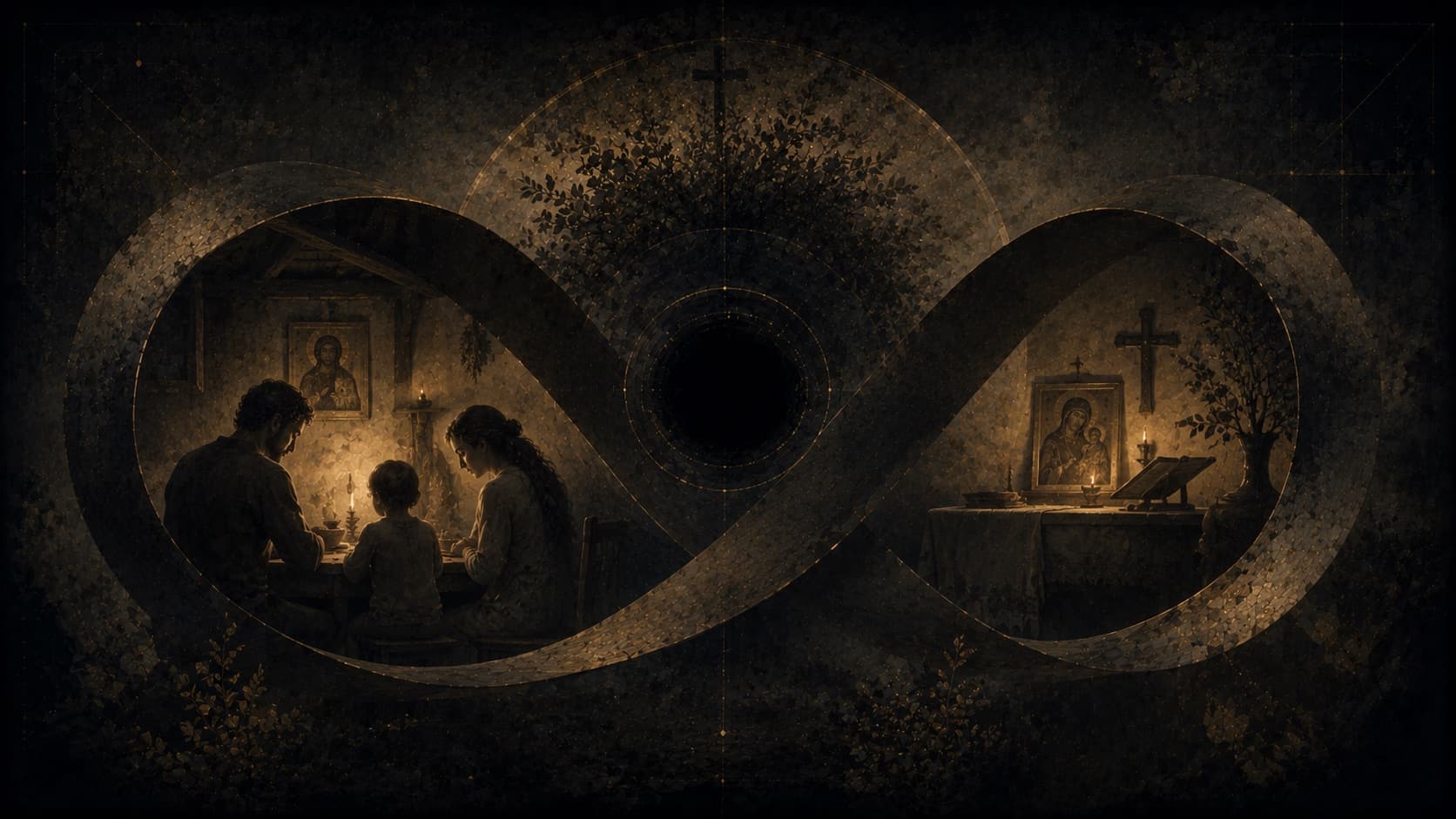
The early Church valued both marriage and virginity highly. This is not a contradiction, but the tension of two Christian paths. Paul speaks of marriage as a gift, but also of celibacy as a gift. Later, Augustine speaks of the goods of marriage: offspring, faithfulness, and the mysterious dimension of the union. John Chrysostom sees the Christian home as a “little church.”
At the same time, the ancient tradition sometimes spoke of virginity so highly that marriage could be perceived as a secondary path. A contemporary reading requires caution: one should neither devalue monasticism nor turn marriage into a spiritually incomplete state. In Christianity, both marriage and celibacy can be paths to God if they are received as vocations, not as social automatisms.
From blessing to crowning: how the ecclesial rite took shape
From the fourth century, the participation of clergy in marriage celebrations becomes more visible. Sources speak of prayers, blessings, the presence of a priest, veils, the joining of hands, and other actions that gradually shape the ecclesial appearance of marriage. But for a long time this was not a single obligatory form for all Christians.
In the Byzantine world, the connection between marriage and the Eucharist becomes an important stage. Scholars of the Orthodox marriage tradition show that the early logic of ecclesial marriage was eucharistic: the spouses come to the church, a prayer is read over them, and they receive Communion. This is important for understanding the common cup in the present rite of crowning. Today this cup is not the Eucharist, but it preserves the memory that marriage is understood not as a private contract, but as the inclusion of shared life in ecclesial communion.
At the end of the ninth century, a legal turning point occurs. The Byzantine emperor Leo VI, in Novel 89, decreed that marriages must be confirmed by an ecclesial blessing. This does not mean that crowning arose at that moment. But it is here that ecclesial blessing becomes an obligatory factor in the legal recognition of marriage for free persons. Later this norm was expanded to other groups as well.
In this way, Christian marriage travels a long path: from civil marriage, which the Church recognizes and blesses, to marriage that receives its own liturgical form and ecclesial-legal significance. This path cannot be simplified into the slogan “it used to be only this way.” The history of marriage is the history of the gradual ecclesial formation of human love.
Marriage as sacrament: what is actually sanctified
From the Orthodox perspective, marriage is called a sacrament not because it is incomprehensible, but because in it human love becomes a place of grace’s action. The Church does not simply “permit” spouses to live together and does not simply decorate an already existing union with a religious rite. She prays that this union may be sanctified, rooted in faithfulness, included in ecclesial life, and directed toward salvation.
It is important not to confuse the levels. Socially, marriage can be described as a form of family and kinship. Legally, it is a public union with rights and responsibilities. Psychologically, it is intimate connection, trust, and shared life. But the sacrament speaks of something else: human love can become a path to God. Not automatically, not magically, and not without personal labor, but truly.
For this reason, crowning does not replace civil responsibility, does not cancel psychological maturity, and does not guarantee a happy life without effort. It opens the highest measure of marriage. If spouses are crowned, they agree not simply to “be together,” but to learn to live before God, in the Church, in faithfulness and mutual service.
The symbolism of crowning
The Orthodox rite of crowning is theology in action. It speaks not only with words, but also with gestures: rings, candles, crowns, the common cup, the procession around the analogion, and the readings from the Apostle and the Gospel.
Betrothal and rings
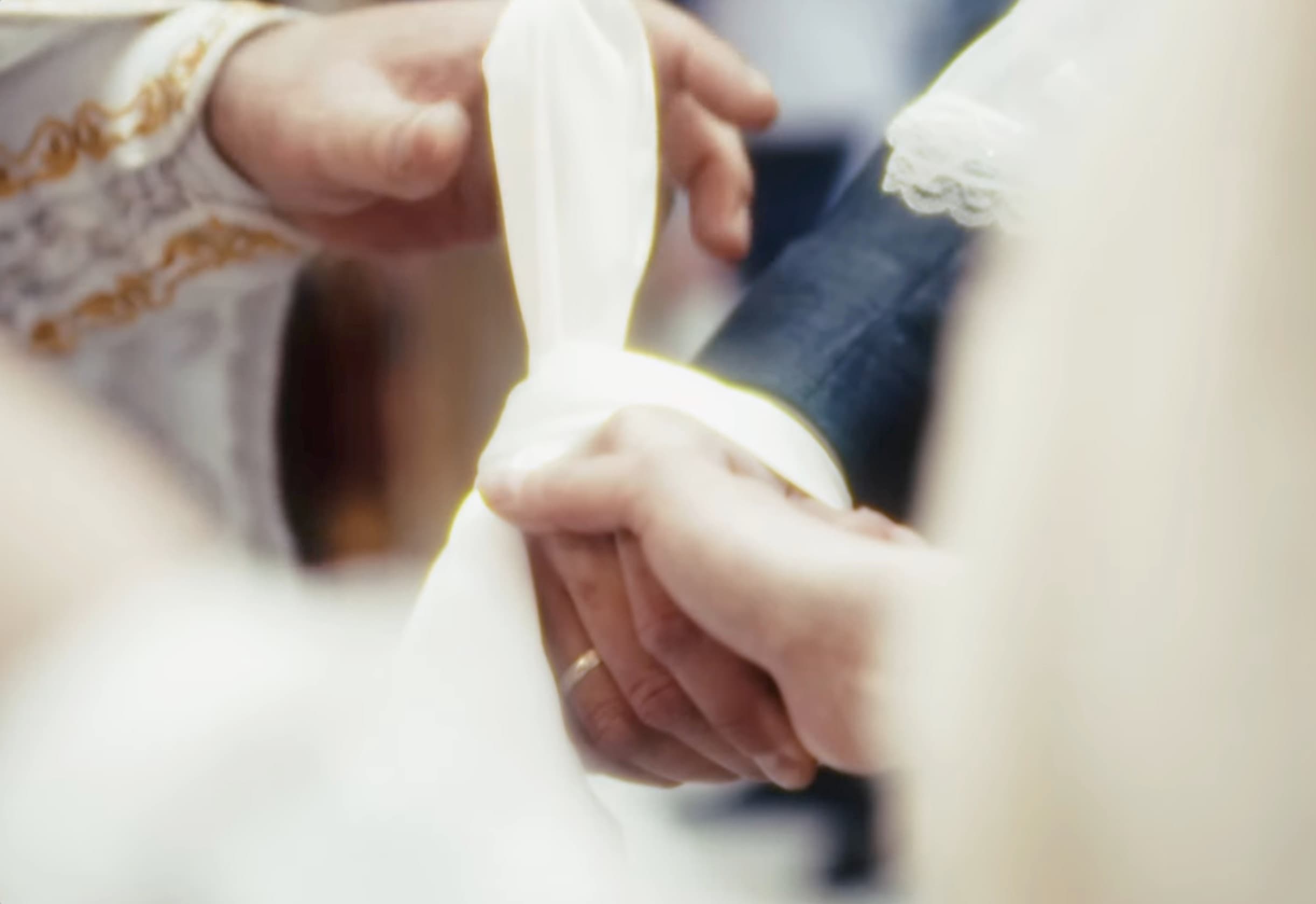
The rite begins with the betrothal. The rings express promise, faithfulness, and mutual responsibility. In the ecclesial context, this is not simply a romantic sign, but a public recognition of the union before God and the Church. A ring is closed, but it does not close the person in upon himself or herself: it points to constancy and faithfulness.
Candles
Candles recall Christ as the Light of the world and remind us that the shared life of the spouses should be illumined not only by feelings, but by the presence of God. This is a simple symbol, but it shows the ecclesial logic of marriage precisely: the spouses do not produce the meaning of their love out of nothing; they receive the light that is to illumine their home.
Crowns
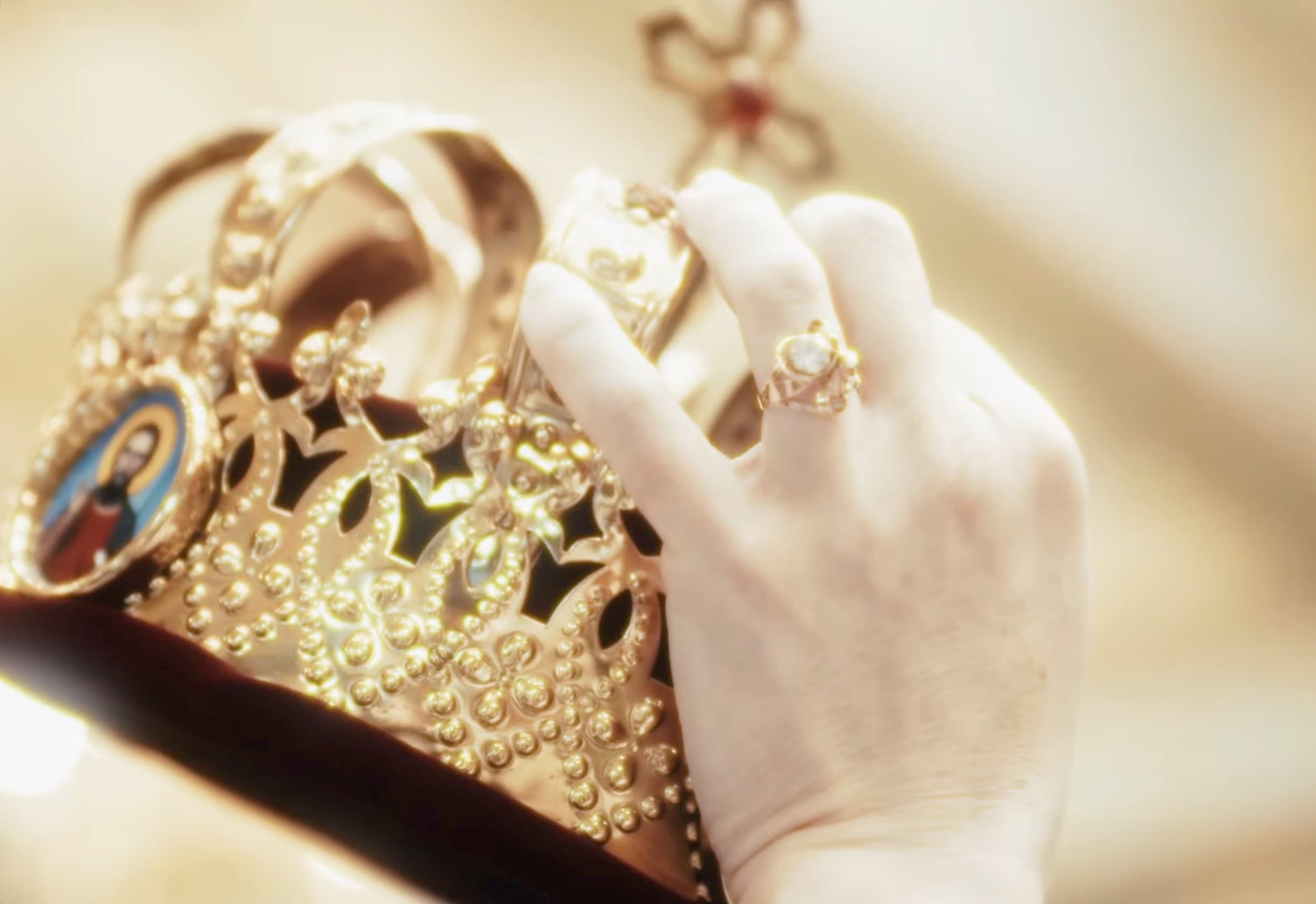
The culmination of the rite is the placing of the crowns. The crowns have a double meaning. On the one hand, they speak of glory and honor: the spouses receive the dignity of a new household, a small kingdom of love and responsibility. On the other hand, the crowns recall martyrdom, that is, witness and self-giving.
This is one of the strongest symbols of Christian marriage. Love here is not reduced to pleasure, status, or mutual benefit. It requires the death of egoism. The crowns say: marriage is an honor, but an honor that bears the cross.
The common cup
After the prayers, the spouses are given the common cup. In the present rite this is not the Eucharist, but a symbol of shared life. The spouses will drink not only what is sweet, but also what is bitter. They will share joy, fatigue, illness, aging, mistakes, forgiveness, and gratitude. The common cup says: life can no longer be drunk separately.
The procession around the analogion
The procession around the analogion shows the spouses’ first steps as a shared path. At the center is the Gospel, not only the couple themselves. This is important: Christian marriage does not close the spouses into the romantic circle of “us against the whole world.” Their movement takes place around ecclesial memory, around Christ, around the future Kingdom.
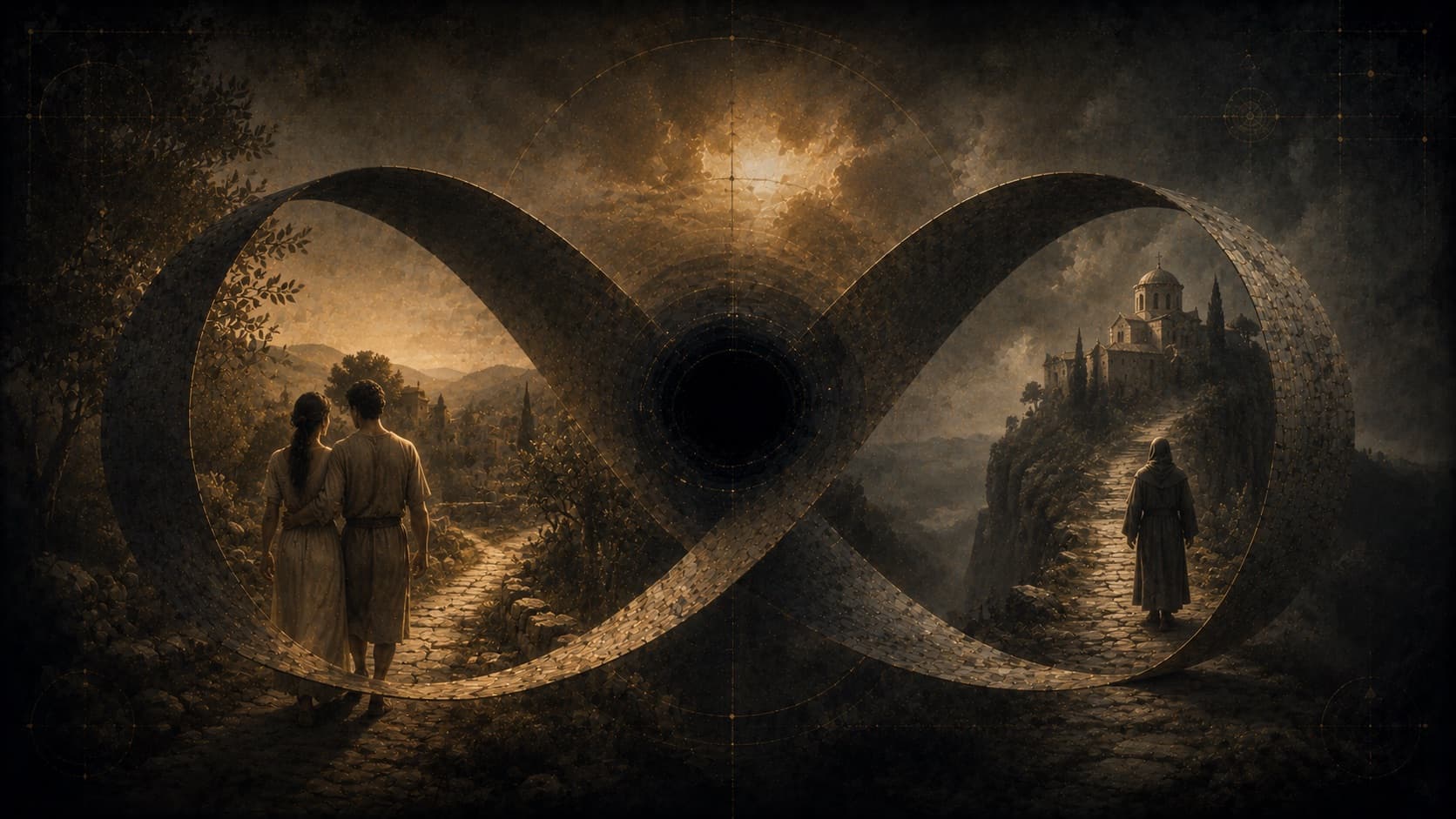
Marriage, virginity, and monasticism
The Christian tradition has never been reducible to the slogan “everyone must marry.” The New Testament gives a high value to celibacy for the sake of the Kingdom. Monasticism becomes one of the central paths of Christian holiness. But this should not turn marriage into a second-class state.
Marriage and monasticism are different, but not hostile. In both cases, the human person learns not to belong wholly to himself or herself. The monk renounces the marital union for the sake of undivided service to God. The spouse renounces solitary autonomy for the sake of faithfulness to the other and shared life before God. In both paths there is asceticism, freedom, obedience, struggle against egoism, and the possibility of holiness.
A more precise formula is therefore this: marriage and monasticism are not competing statuses, but two Christian paths. Each can be distorted. Monasticism can turn into pride and escape. Marriage can turn into domestic closure and the cult of family comfort. But each can become a path to God if it is received as a vocation.
Orthodoxy, Catholicism, and Protestant approaches
Orthodoxy, Catholicism, and Protestant traditions share many biblical foundations of marriage: creation, faithfulness, the union of man and woman, the words of Christ, Ephesians 5, and responsibility before God. But the accents differ.
In Orthodoxy, marriage is usually understood as a mystery of the Church, in which the union of man and woman is sanctified through ecclesial blessing and the liturgical rite. The emphasis falls on the ecclesial character of marriage, crowning, blessing, the eucharistic horizon, and the path of mutual salvation.
In Catholicism, marriage between the baptized is also understood as a sacrament, but the classical Latin formulation especially emphasizes the free consent of the spouses as that which brings marriage into being. The presence of the Church and canonical form are important, but the center of gravity is different: the consent of the spouses, expressed in the proper form.
Protestant approaches are not uniform. Lutheran and Reformed traditions usually do not reproduce the medieval Latin sacramental model of marriage in its full form. Marriage is understood as an order of life established by God, a union of help, faithfulness, the birth and upbringing of children, the preservation of chastity, and social order. The Anglican tradition, however, preserves a high liturgical and symbolic language of marriage as an image of Christ and the Church.
These differences should not be turned into caricature. It is not that one tradition is “for marriage” and another is “against it.” The issue is different centers of gravity: blessing and ecclesial mystery, the consent of the spouses, an order established by God, liturgical memory, and canonical form.
What is often misunderstood
Myth 1. Crowning existed in its present form from apostolic times
Historically, this is not true. Early Christians entered marriage according to the civil and familial norms of their time. The Church gradually strengthened prayer, blessing, the participation of the bishop or priest, the connection with the Eucharist, and the church rite. The present form of crowning is the result of a long development.
Myth 2. Church marriage is simply a beautiful religious ceremony
No. From the Orthodox perspective, crowning reveals marriage as an ecclesial event. The symbols of the rite are not theater: rings, crowns, cup, candles, and the procession around the analogion speak of faithfulness, the light of Christ, glory, cross, shared life, and movement around the Gospel.
Myth 3. Ephesians 5 is primarily a text about the husband’s authority
Such a reading is too poor. The center of the text is the love of Christ for the Church, that is, self-giving. If the husband is called to love his wife as Christ loves the Church, then the point is not domestic domination, but sacrificial responsibility.
Myth 4. Christianity values marriage only for the sake of children
Children are important, but they do not exhaust the meaning of marriage. The tradition also contains themes of faithfulness, sacrament, mutual salvation, the domestic church, the common cup, asceticism, and love. Marriage is not reduced to biology, although it is not separated from bodily life and the birth of life.
Myth 5. Marriage and monasticism are in competition
They are different, but they do not have to compete. Both paths can be paths to God. Both require asceticism. Both can be distorted. The problem begins when marriage is turned into a cult of comfort and monasticism into spiritual pride.
Open pastoral questions
This article offers a general overview. But alongside the topic of marriage, questions immediately arise that cannot be resolved with a single phrase.
Civil marriage
In the modern state, civil registration has legal significance. But the church tradition asks a different question: when does a union become not only legally recognized, but also blessed by the Church? The practice of different Orthodox jurisdictions requires separate consideration.
Cohabitation without registration
This topic requires separate pastoral and canonical work. The history of crowning by itself does not provide a ready-made answer for every contemporary situation. Here it is important not to confuse factual shared life, civil responsibility, ecclesial blessing, and personal spiritual maturity.
Divorce
The Gospel norm speaks of the seriousness and indissolubility of marriage. But church history knows pastoral cases of the breakdown of marriage, remarriage, and economy. Divorce cannot be reduced either to complete normality or to a single legal formula.
Remarriage
Remarriage in the Orthodox tradition has its own history, liturgy, and pastoral tone. It cannot be discussed as though it were simply a second celebration of the same type. This requires a separate article.
Mixed marriages
Marriages between people of different Christian traditions or religions require distinctions concerning faith, ecclesial belonging, the upbringing of children, canonical norms, and pastoral economy.
Infertility
If the meaning of marriage is reduced only to childbearing, infertile couples become theologically humiliated. But the Christian tradition is broader: marriage is connected with the fruit of love, faithfulness, home, mutual salvation, and service. The topic of infertility requires a particularly careful separate conversation.
Sexuality in marriage
Christianity does not regard bodily life as evil, but neither does it accept it as an autonomous cult of desire. Sexuality in marriage requires a language of love, chastity, freedom from violence, respect, mutuality, and spiritual responsibility. This topic requires a separate body of sources and a very careful tone.
Conclusion
Christian marriage is not simply an ancient social form, not only a legal contract, and not only a personal love story. It is the union of man and woman, which the Christian tradition reads through creation, covenant, the words of Christ, the love of Christ and the Church, blessing, crowns, the common cup, and the path of mutual salvation.
Historically, ecclesial crowning did not appear instantly in a completed form. The first Christians lived within the marriage norms of their society, but gradually the Church brought marriage into the space of prayer, blessing, the Eucharist, and canonical responsibility. The Byzantine rite of crowning became the mature liturgical form of this long history.
Theologically, marriage is not exhausted by the wedding day. Crowning opens a path, but that path must be walked. The spouses become not simply a couple, but a community of life. Their home can become a little church. Their love can become a school of freedom. Their faithfulness can become a witness. Their common cup can include both joy and sorrow. Their crowns can be both glory and cross.
Therefore the main question of Christian marriage is not: “how can the rite be performed beautifully?” The deeper question is different: can human love become a place of God’s presence, a school of faithfulness, and a road toward the Kingdom?
A short glossary
Sacrament An ecclesial action in which invisible grace is revealed through a visible sign. Applied to marriage, it means the sanctification of the conjugal union in the Church.
Crowning The Orthodox liturgical rite of marriage, whose culmination is the placing of crowns.
Betrothal The first part of the marriage rite, connected with rings and the public promise of the union.
Covenant A biblical category of faithful and responsible relationship before God. The prophets use marital language to describe the relationship between God and Israel.
One flesh A biblical expression from Genesis that became one of the key foundations for the Christian understanding of marriage.
Mysterion The Greek word for “mystery.” In Ephesians 5:32 it is connected with Christ and the Church and became important for later theology of marriage.
Sacramentum A Latin word connected with the Western development of the language of sacraments. In the history of marriage, it played a special role in the formation of Catholic sacramental doctrine.
Economy In Orthodox canonical and pastoral language, the condescending and healing application of church rules for the sake of a person’s salvation.
Akrivia The strict application of the canonical norm.
Domestic church The family as a small space of ecclesial life, prayer, upbringing, and mutual help.
Agape Self-giving love. In marriage, it purifies and directs human love according to the image of Christ.
Eros Love as desire, attraction, longing. The Christian tradition does not have to destroy eros, but seeks to purify it and unite it with faithfulness and agape.
Sources and materials
Biblical sources
- Gen 1–2.
- Deut 24:1–4.
- Tob 8.
- Song of Songs.
- Hos 1–3.
- Jer 3.
- Matt 19.
- Mark 10.
- John 2.
- 1 Cor 7.
- Eph 5.
Early Christian and patristic sources
- Ignatius of Antioch. Letter to Polycarp.
- Tertullian. To His Wife.
- John Chrysostom. Homilies on the Epistle to the Ephesians.
- Augustine. On the Good of Marriage.
Liturgical and ecclesial sources
- The Orthodox rite of betrothal and crowning.
- Orthodox Church in America materials on marriage and crowning.
- Explanations of the Orthodox marriage rite in Greek Orthodox archdiocesan and parish materials.
- Documents and materials on marriage from the Holy and Great Council of the Orthodox Church.
Historical and academic studies
- John Meyendorff. Christian Marriage in Byzantium: The Canonical and Liturgical Tradition.
- Philip L. Reynolds. How Marriage Became One of the Sacraments.
- Judith Evans Grubbs. Marrying and Its Documentation in Later Roman Law.
- Gabriel Radle. The Christianization of Marriage Ritual in Late Antiquity.
- John Witte Jr. Church, State, and Family.
- Studies on the ancient Israelite family, marriage gifts, levirate, and the social structure of the household.
Comparative materials
- Catechism of the Catholic Church: section on the sacrament of marriage.
- Westminster Confession of Faith: section on marriage and divorce.
- Book of Common Prayer: marriage rite.
- Lutheran and Reformed materials on marriage as an order established by God.
Questions for a future interview
- How can one distinguish the biblical image of marriage from the later ecclesial sacrament of marriage?
- What exactly does Christ restore in marriage: the legal norm, the anthropological design, or both levels at once?
- Can Cana of Galilee be called the “institution of the sacrament of marriage,” or is that too late a formula?
- Why should 1 Corinthians 7 be read neither as an anti-marriage text nor as simply a “family” text?
- In what sense does Ephesians 5 truly speak about marriage, and in what sense first of all about Christ and the Church?
- Why did early Christians live for a long time without a universally obligatory church rite of marriage?
- What changed in Byzantium when ecclesial blessing became legally obligatory?
- To what extent does the present Orthodox rite of crowning preserve the memory of the connection between marriage and the Eucharist?
- Why do the crowns signify both royalty and martyrdom at the same time?
- How can the symbol of the common cup be explained to a modern person without banal sentimentality?
- What is the deeper difference between the Orthodox and Catholic emphasis: the blessing of the Church or the consent of the spouses?
- How can one avoid the false opposition between marriage and monasticism in church preaching?
- What mistakes are most often made by popular Orthodox texts about marriage?
- What in the topic of remarriage should be discussed historically, and what pastorally?
- How can one speak in a contemporary and honest way about infertility, sexuality, and crises in marriage without destroying the theological meaning of marriage?