Stromata research article
Evolution, Humanity, and Christian Faith: Where Science Ends and Theological Debate Begins
A longread on modern evolutionary biology, human origins, and theological questions that cannot honestly be bypassed.
Editor: Mercury Gudym
A conversation about evolution almost never remains just a conversation about biology. As soon as one utters the words "human origins," "Adam and Eve," "monkey," or "death before the Fall," multiple different voices instantly appear in the room rather than just one: a scientist, a philosopher, a theologian, a preacher, a skeptic, a school textbook, family memory, and an internet commenter wielding a club.
This text belongs to Stromata’s project “Evolution, faith, and the image of the human person” and unfolds it as a research longread.
How to read this text
- Distinguish biological facts from philosophical and theological interpretation.
- Do not reduce the conversation to the caricature of science versus faith: the conflict often begins between bad philosophy of science and bad theology.
- Pay special attention to the points of tension: Adam and Eve, the fall, death, the image of God, and Christ as the New Adam.
Table of contents
Open table of contents+
Why this conversation is necessary
This project is not an attempt to force science and religion into an artificial harmony. It is needed for something else: to speak honestly about where older religious explanations are no longer sufficient, where science describes mechanisms but does not answer the question of meaning, and where Christian theology needs careful rethinking rather than denial of data.
A literalist rejection of evolution no longer looks like an intellectually sufficient answer. But it does not follow from this that science has proved the absence of God or exhausted the mystery of the human person.
Evolutionary biology explains natural mechanisms of the origin and change of living beings. By itself it does not answer what it means to be a person, the image of God, a being of freedom, responsibility, and hope.
Introduction: why this conversation so quickly turns into an argument
A conversation about evolution almost never remains just a conversation about biology. As soon as one utters the words "human origins," "Adam and Eve," "monkey," or "death before the Fall," multiple different voices instantly appear in the room rather than just one: a scientist, a philosopher, a theologian, a preacher, a skeptic, a school textbook, family memory, and an internet commenter wielding a club.
The main confusion arises not because the topic is too complex. It is indeed complex, but not impenetrable. The confusion begins where different levels of the question become mixed together.
Science asks: by what natural processes did living organisms emerge and change? How did populations diverge? What data do genetics, paleontology, comparative anatomy, and observable evolution provide?
Philosophy asks: what does this picture mean? Can a human being be reduced to biology? What is randomness? Is there a purpose in nature? What do we even mean by personhood, consciousness, and freedom?
Theology asks: who is humanity before God? What does the image of God mean? How should we understand the Fall? What does death mean if animals were dying for millions of years before humans appeared? How are Adam and Christ connected?
When a biological theory morphs into worldview atheism, it steps beyond the boundaries of science. When a theological text is read like a textbook on population genetics, it too finds itself outside its proper genre. The conflict often begins not between science and faith as such, but between bad philosophy of science and bad theology.
This article does not attempt to "close the issue" or deliver a final verdict. Its task is more modest and more useful: to separate the levels of conversation, to show what modern science actually asserts, where debates still exist within it, what Christian responses are available, and why the topic of the Fall and death remains the most difficult sticking point.
1. What modern science actually says about evolution
In its simplest form, evolution means inheritable changes in populations of living organisms over time. Two words are crucial here: inheritable and populations.
An individual organism does not evolve during its lifetime. A giraffe does not stretch its neck through sheer willpower and pass the results of this gymnastics on to its descendants. Populations evolve across generations: hereditary differences arise within them; some variants are passed on more frequently, while others disappear or become rare.
The classic short formula for evolution is descent with modification. Descendants resemble their ancestors but are not exact copies of them. Over vast expanses of time, small changes can accumulate, lineages diverge, new species emerge, and old ones vanish.
Natural selection: not a random roulette and not a secret director
One of the most persistent myths sounds like this: "Evolution says that everything happened by chance." This is incorrect.
There is indeed an element of randomness in evolution: mutations and recombinations do not occur because an organism "wanted" to improve in advance. DNA is copied, changes sometimes appear during this copying, external factors sometimes affect the genome, and sometimes sections of genetic material are recombined in new ways.
But natural selection is not pure chance. If a certain inheritable trait helps an organism survive and leave offspring in a specific environment better than others, this variant can spread more frequently. The environment does not think or plan, but it does "sort" the variants.
A useful analogy is text editing. Typos can occur randomly, but an editor does not randomly keep some variants while removing others. There is no editor with a red pen in nature, but there is environmental pressure, competition, reproduction, organismal constraints, and a multitude of recurring factors.
Therefore, the honest formula is this: the raw material is often random relative to the organism's needs, but selection and many constraints operate non-randomly.
Evolution does not equal the origin of life
Another common mistake: "Evolution explains how life emerged from non-living matter." Strictly speaking, this is not true.
Evolutionary theory primarily explains how already existing life changed, branched, and either complexified or simplified. The question of how the very first life emerged belongs to a different field of research, usually called abiogenesis or the chemistry of the origin of life.
This does not mean that science studies nothing regarding the origin of life. It does. But there are still many open questions there: which chemical systems came first, how heredity arose, how the first cells appeared, and which conditions were decisive. Therefore, the argument that "evolution is unproven because scientists don't know exactly how the first cell appeared" is structurally flawed. These are different, though related, questions.
2. Humans did not descend from modern monkeys
The phrase "humans descended from monkeys" is simultaneously understandable and inaccurate. It survives in everyday conversation simply because it is brief. But strictly speaking, modern science asserts something else:
humans and modern great apes share common ancestors.
We did not descend from today's chimpanzees, gorillas, or orangutans. Chimpanzees are not our "unfinished grandfathers." They are our modern evolutionary cousins. It is better to say it this way: humans and chimpanzees are similar not because one descended from the other, but because in the distant past, their lineages diverged from common ancestral populations.
A simple analogy: you did not descend from your cousin. But you share common grandparents. The same applies here: humans and chimpanzees are not in an "ancestor → descendant" relationship, but rather in a relationship of "related branches stemming from a common root."
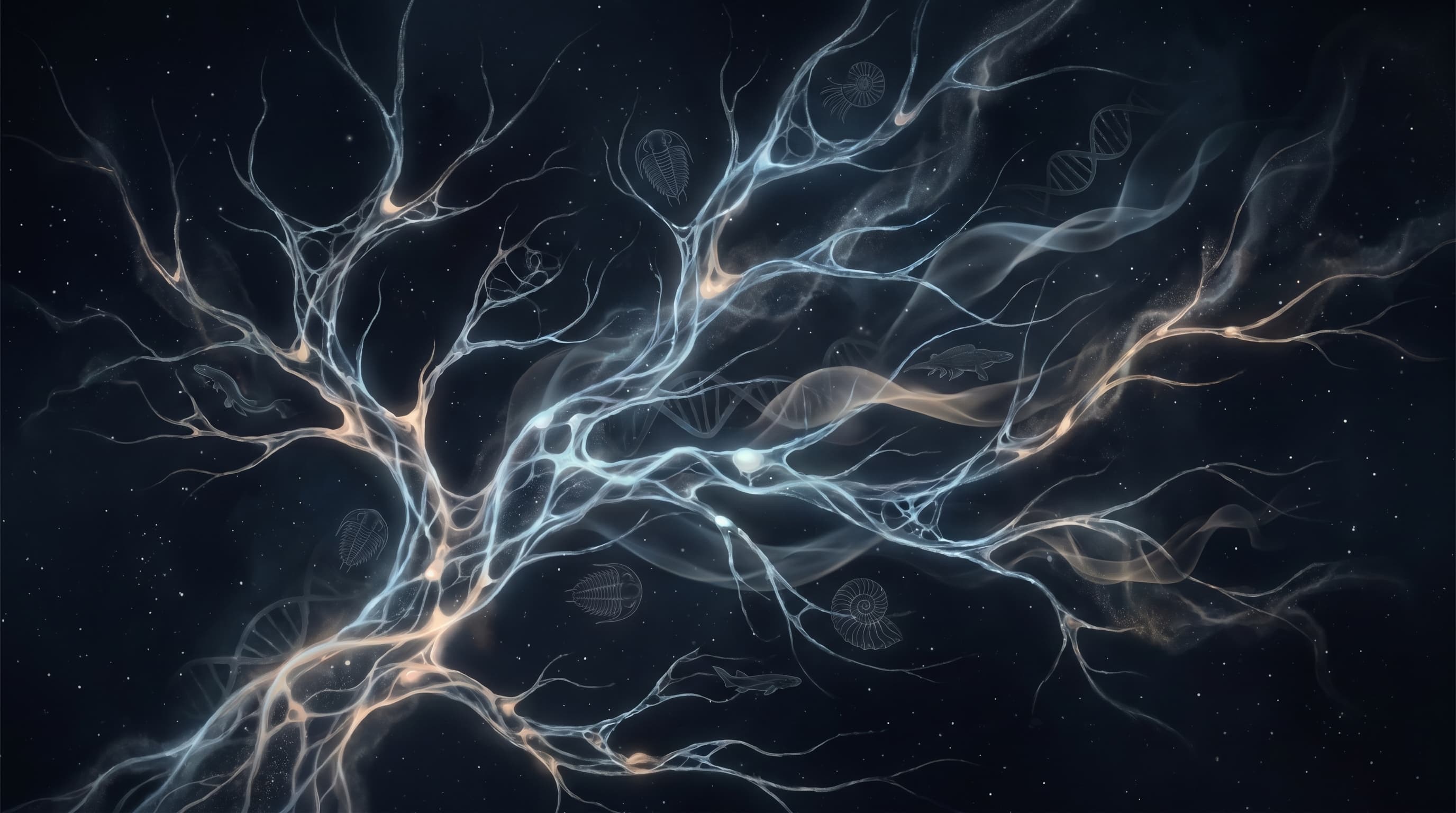
Hence the answer to the popular question: "If evolution is true, why aren't monkeys turning into humans right now?" Because evolution is not a ladder where everyone is obligated to climb toward humanity as the final rung. It is more like a river delta or a tree: lineages branch out, each goes its own way, and one branch is not required to become another.
Modern chimpanzees are evolving too. They are simply evolving as chimpanzees, in their own conditions, with their own history. The human lineage is not the ultimate goal of all nature, but just one branch in the grand history of life.
3. Anthropogenesis: not a ladder, but a branching bush
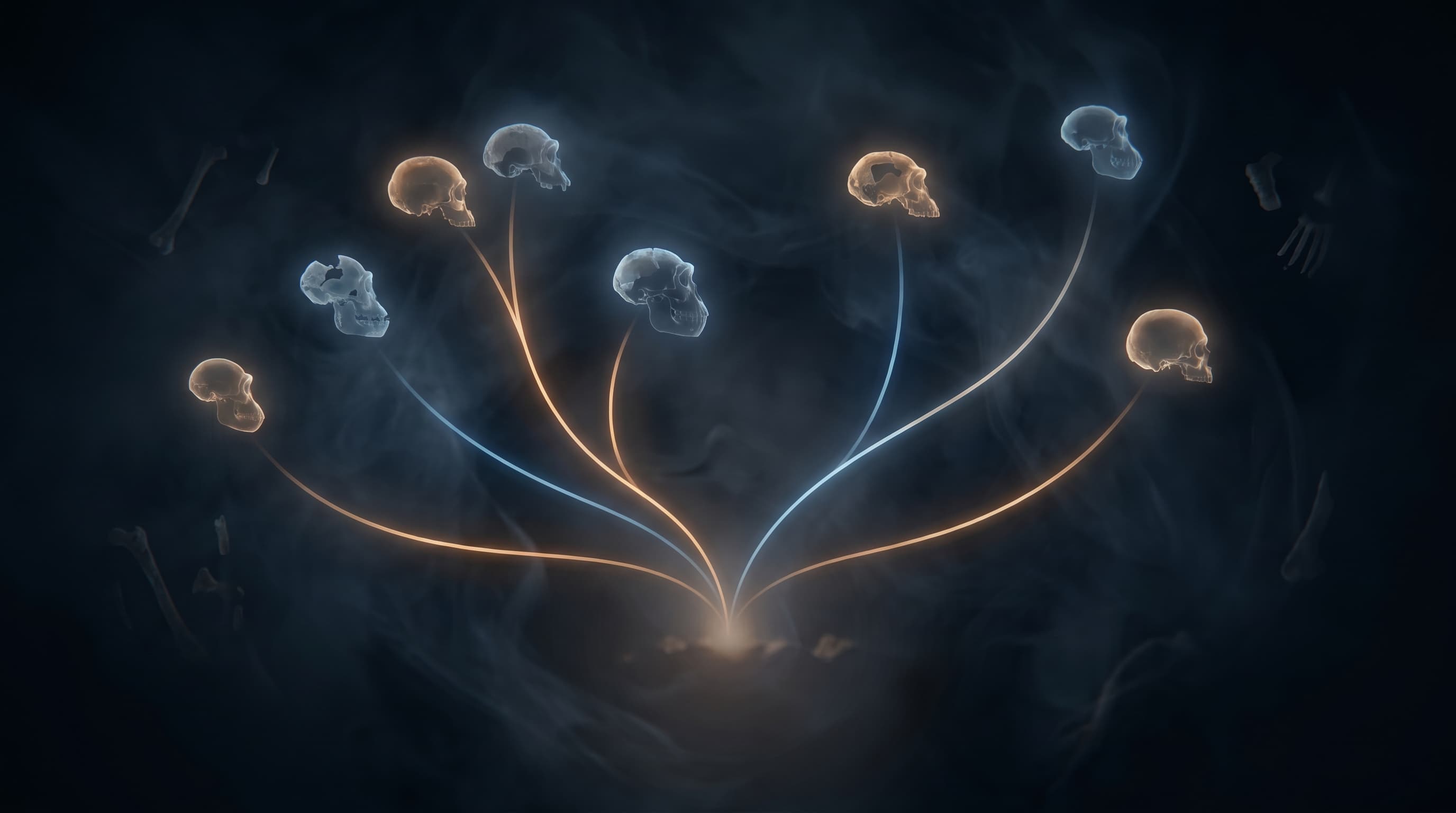
Old popular illustrations often depicted human origins as a march: an ape, a stooped ancient human, a straighter human, an almost modern human, and finally an office worker with a briefcase. This image is convenient, but deceptive.
Modern paleoanthropology reveals a much more complex picture. Human evolution resembles a branching bush rather than a straight column, where different lineages coexisted, diverged, disappeared, sometimes intersected, and even interbred.
The African origin of Homo sapiens
Today, it is widely accepted that *Homo sapiens* emerged in Africa. An age of around 300,000 years is frequently cited. But here is a crucial detail: fewer and fewer data support the simple model that a "fully ready modern human" popped into existence in one tiny spot on the map and then simply spread across the world.
A more convincing model suggests that early *Homo sapiens* was formed within a network of African populations. These groups could have been partially separated geographically and culturally, only to later re-establish contact, exchanging genes and technologies. In this model, humanity does not appear at the snap of a finger, but rather as a mosaic of traits assembling over a complex history.
The discoveries from Jebel Irhoud in Morocco perfectly illustrate this mosaic nature: ancient representatives of *Homo sapiens* already exhibit some modern facial and jaw features, yet retain more archaic characteristics of the braincase. This is exactly what "transitional" means in a scientific sense: not a caricatured half-ape/half-human, but a combination of older and newer traits.
Neanderthals and Denisovans: our neighbors in human history
Neanderthals were not "half-animals" or dead-end savages from a crude caricature. They were a human lineage closely related to us, living in Eurasia. They possessed a complex culture, used tools, cared for their group members, and most importantly for genetics—they encountered and interbred with the ancestors of modern humans.
Most modern humans outside of Africa carry a small fraction of Neanderthal DNA, usually around 1–2%. This does not mean "we are a little bit Neanderthal" in a sensationalist way. It means that human history was a history of contacts, not of sterilely isolated lineages.
Denisovans are another ancient human lineage, known for a long time primarily through DNA and a small number of bone fragments. Denisovan admixture is distributed unevenly: it is minuscule in most populations, but can be significantly higher in certain groups in Oceania. One well-known example is a genetic variant associated with Tibetans' adaptation to high altitudes, which is linked to Denisovan heritage.
Thus, the tree of human evolution turns into a network. The branches not only split apart but touched again in places. This does not destroy the evolutionary picture; it makes it more vibrant and precise.
4. Which evidence is especially important
When people say "evolution has no proof," they usually don't mean a lack of evidence, but rather a lack of familiarity with how that evidence is structured. The modern evolutionary picture rests not on a single discovery or a single argument, but on a multitude of independent lines of data.
Fossil forms
Paleontology reveals sequences of ancient organisms, extinct lineages, transitional mosaics of traits, and the alteration of forms over time. It is vital to understand that a "transitional form" is not obliged to look like a fantastical creature made exactly half of two modern species. In reality, it is an organism that possesses a combination of more ancient and more recent features.
Genetics
Genetics has become one of the strongest confirmations of biological kinship. Genomes can be compared like massive texts containing shared fragments, typos, rearrangements, and traces of ancient events.
One famous example is human chromosome 2. Humans have 46 chromosomes, while other modern great apes typically have 48. Genetic data show that human chromosome 2 arose from the fusion of two ancestral chromosomes. It contains the exact traces expected from such a fusion: remnants of telomeric sequences in the middle of the chromosome and vestiges of an extra centromere.
To put it very simply: it is like two old books that were once bound together into a single volume. The seams remain at the binding, making it clear that they were previously two separate tomes.
Comparative anatomy and embryology
The body structures of living beings frequently carry signs of kinship. The limb bones of vertebrates might perform entirely different functions—grasping, running, swimming, flying—yet share a common structural plan. This alone does not prove everything, but alongside genetics and paleontology, it forms a coherent picture.
Observable evolution
Evolution is not merely a tale of the distant past. Population changes can be observed in real time: antibiotic resistance in bacteria, changes in viruses, adaptations in insects, and rapid shifts in certain plants and animals. Naturally, observable microevolution by itself does not show the entire journey from the first organisms to humans, but it successfully demonstrates the real mechanisms behind the alteration of inheritable traits.
5. Where science debates, and where it no longer does
Within science, there is almost no debate about whether evolution exists as a fact. The main arguments center around something else: the mechanisms, the pace, the roles of different factors, and the scope of theoretical extensions.
The Modern Synthesis
The modern evolutionary synthesis is the integration of Darwin's idea of natural selection with genetics, population biology, and mathematical models. At its core is the concept that evolution involves changes in the frequencies of inheritable variants within populations due to mutations, recombination, selection, drift, and migration.
This framework remains robust. It has not been "canceled" by new research.
The Extended Evolutionary Synthesis
The extended evolutionary synthesis is an attempt to add more layers to the classical framework: organismal development, phenotypic plasticity, niche construction, epigenetic inheritance, and cultural evolution.
Phenotypic plasticity means that the same genotype can express itself differently under varying conditions. Niche construction means that organisms don't just adapt to their environment, but actively change it: beavers build dams, humans build cities, and plants alter the soil. Epigenetics studies changes in gene activity without altering the underlying DNA sequence itself.
It is important not to turn this into sensationalism. The extended synthesis is not "evolution turned out to be false" nor is it "Darwin has been canceled." It is a debate about how broad the theory should be, which causes should be considered central, and which are supplementary. Some scientists believe the new data can be seamlessly integrated into the existing framework. Others argue that a deeper restructuring of the theoretical language is needed.
In other words, the debate is not between "evolution exists" and "evolution doesn't exist," but between different versions of evolutionary theory.
Human cultural evolution
Cultural evolution is uniquely critical for humans. Humans pass on not only genes, but also language, skills, technologies, habits, norms, religious concepts, and methods of upbringing. Culture itself alters the environment of selection.
The classic example is adult lactose tolerance in certain populations. The cultural practice of animal husbandry and milk consumption changed the conditions, rendering the genetic variants for lactose tolerance highly advantageous.
Human evolution, therefore, is not merely biological. It is biocultural: genes, body, brain, language, technology, sociality, and symbolic worlds form a profoundly complex knot.
6. Main myths about evolution
Myth 1. "Evolution means humans came from monkeys"
More accurately: humans and modern great apes share common ancestors. A modern monkey is not our ancestor, just as your cousin is not your grandfather.
Myth 2. "If evolution is true, monkeys should be turning into humans"
No. Evolution is not a ladder leading to humanity. It is the branching of lineages. One branch is under no obligation to become another.
Myth 3. "Evolution is pure chance"
No. Mutations are often random regarding the organism's needs, but selection is highly non-random. Evolution combines chance, regularity, developmental constraints, and historical contingency.
Myth 4. "Evolution proves that God does not exist"
No. By its very method, science investigates natural causes. It does not use God as a variable in a laboratory model and cannot directly prove or disprove God. The atheistic interpretation of evolution is philosophy, not biology itself.
Myth 5. "Evolution has no evidence"
On the contrary, it has many independent lines of confirmation: genetics, fossil forms, comparative anatomy, biogeography, and observable evolution. One can debate the details, but it is dishonest to claim that the entire picture hangs on thin air.
Myth 6. "There are no transitional forms"
There are. But a transitional form is not a cartoonish hybrid "half one thing, half another." It is an organism possessing a mosaic of traits, demonstrating kinship and the gradual nature of change.
Myth 7. "Evolution always leads to progress"
No. Evolution is not bound to lead to greater complexity. Sometimes it leads to simplification, specialization, or simply adaptation to a specific environment. A bacterium is not "worse" than a human in an evolutionary sense. It can be incredibly successful within its own niche.
7. Why it is hard for Christianity to talk about evolution
If the question were solely whether God could have created the living world through natural processes, the conflict would be much milder. Many Christians can easily say: God is the Creator not only when He acts instantaneously and visibly, but also when the world develops through the laws He instituted.
But the real difficulties begin further down the line.
If humanity emerged evolutionarily, then:
How should we understand Adam and Eve? Were they the first biological pair? What does the image of God mean? When does spiritual accountability begin? How should we understand original sin? What are we to make of animal death before humans? How are Adam and Christ connected in the writings of the Apostle Paul?
These are not minor questions. They touch the very nerve of Christian anthropology.
Where religious language requires rethinking
A literalist denial of evolution is no longer an intellectually sufficient answer: too much in modern biology, genetics, paleontology, and biogeography points to the kinship of living beings and to the complex history of human populations.
But this does not mean that science has proved that God does not exist. Evolution explains biological mechanisms, not the ultimate meaning of personhood, freedom, moral responsibility, or human dignity.
Christian language therefore needs not panic denial but precision. The difficult questions remain difficult: Adam and Eve, the fall, death before humanity, the image of God, the soul, and Christ as the New Adam.
8. Main Christian positions
There is no single simple answer to evolution within Christianity. There is a spectrum of approaches.
Young Earth Creationism
Young Earth creationism reads the early chapters of Genesis as literally as possible: the world was created in six ordinary days, the Earth is young, and the global flood is often seen as the primary geological event.
The strength of this position is its internal simplicity and clarity: an historical Adam, a literal Fall, death purely as a consequence of sin, and a direct Adam-Christ parallel.
Its weakness is a profound conflict with modern cosmological, geological, genetic, paleontological, and biogeographical data. To uphold this model, one must reject an overwhelmingly large volume of independent scientific evidence.
Old Earth Creationism
Old Earth creationism accepts the ancient age of the Universe and the Earth but typically retains the idea of special divine acts of creation for distinct groups of living things, especially for humans.
This position clashes less with cosmology and geology, but it still struggles with the problem of the common descent of life and genetic data regarding the relatedness of organisms.
Theistic Evolution / Evolutionary Creationism
This position states: God is the Creator of all, and evolutionary processes are one of the methods through which the created world develops.
Its strength lies in its compatibility with modern biology while maintaining faith in God as the primary cause of existence. Its difficulty is the necessity to completely rethink Adam, the Fall, death, and the image of God.
It is important to distinguish between evolution and evolutionism. Evolution is a scientific theory about the development of life. Evolutionism, in a worldview sense, is the assertion that evolution proves the absence of God, purpose, the soul, and human dignity. A Christian can accept evolution as a biological theory while rejecting evolutionism as a reductionist philosophy.
Symbolic and theological reading of Genesis
Some Christian authors suggest reading Adam and Eve primarily as a theological representation of humanity. In this model, Genesis does not speak of the laboratory history of the emergence of *Homo sapiens*, but of a spiritual truth: humanity is called to commune with God, but chooses autonomy, distrust, and decay.
The strength of this approach is that it removes the direct conflict with population genetics. Its weakness is that it requires a very careful explanation of what original sin, redemption, and the apostolic connection between Adam and Christ mean in this context.
A historical pair within a population
There are hybrid models where Adam and Eve are understood as a real pair within an already existing human or pre-human population. God enters into a special relationship with them, calls them into a covenant, and their fall carries spiritual consequences for all humanity.
This model attempts to preserve the historical core without denying population genetics. But it too faces difficulties: how exactly does the spiritual state of one pair spread to everyone? What about the people "outside the garden"? Where is the boundary between a biological human and a theologically understood person?
The Genealogical Adam
A distinct variant is the genealogical Adam model. It distinguishes between genetic and genealogical ancestry. Genetically, humanity does not descend from a single pair in the recent past, but genealogically, one ancient pair could theoretically have become the ancestors of all later humans through a network of pedigrees.
This is an interesting attempt to alleviate part of the conflict between genetics and the traditional historicity of Adam. However, it does not automatically resolve all theological issues. The most challenging questions remain regarding the people outside the initial pair, the transmission of sin, and what exactly makes a human being the bearer of the image of God.
9. Catholic, Protestant, and Orthodox frameworks
The Catholic position
Catholic theology possesses a more formalized official framework. In the encyclical *Humani generis*, Pius XII permitted the discussion of the evolution of the human body as a scientific hypothesis, but emphasized that the soul does not emerge from matter and is immediately created by God. At the same time, polygenism—the descent of humanity from multiple first humans rather than a single pair—was flagged as a serious problem for the traditional doctrine of original sin.
Later Catholic documents and papal statements spoke more freely about evolution, recognizing its strong scientific foundation, yet maintaining the fundamental boundary: the human spiritual soul cannot be explained by biology alone.
The Protestant world
In Protestantism, there is no single center capable of issuing one mandatory position for everyone. Therefore, the range is massive: from literal six-day creationism to evolutionary creationism.
For the sake of discussion, it is vital to clarify which Protestantism is being addressed: fundamentalist, evangelical, Lutheran, Reformed, liberal, or academic. Each field has its own specific emphases.
The Orthodox environment
In Orthodoxy, there is also no single technical "dogma on evolution." There are various approaches: from harsh criticism of evolution to attempts to read Genesis as a theological, liturgical, and anthropological text that does not directly compete with the natural sciences.
The Orthodox tradition is particularly sensitive to the theme of humanity as the image of God, the connection between sin and death, and the understanding of salvation not merely as legal justification, but as healing and deification (theosis). Therefore, the Orthodox conversation about evolution should not be reduced to the question of "whether one can or cannot believe in Darwin." The deeper question sounds like this: how do we speak of humanity as a creature made from the dust of the earth and simultaneously called to God?
10. Adam, Eve, and population genetics
One of the most difficult points is the descent of all humans from a single pair.
Modern population genetics aligns poorly with a model where the entire human genetic pool passed through a single, solitary pair in the recent past. Human genetic diversity points to a much more complex history of populations. Even when discussing "bottlenecks," meaning a sharp reduction in the size of an ancestral population, we are talking about a significantly larger number of breeding individuals than just two people.
It is important to explain the term here.
A population bottleneck is a situation where the size of a population drastically drops. Because of this, a portion of genetic diversity is lost, and the descendants bear the marks of this reduction. Imagine a large library where a fire destroyed the vast majority of the books. From the remaining books, one can deduce that the library once went through a catastrophe. But if many different books remained, it is hard to argue that the entire library was restored from just two pages.
This does not prove that Adam and Eve could not have existed in any sense. But it makes a model where they are the sole biological progenitors of all humanity in recent history extremely problematic.
Theology is forced to choose: either argue against this scientific picture, or clarify what exactly the ancestral nature of Adam and Eve means—biological, spiritual, covenantal, symbolic, genealogical, or something else.
11. The most painful topic: death before the Fall
For many Christians, the main issue is not monkeys or chromosomes. The main issue is death.
If animals died, got sick, suffered, and ate each other for millions of years prior to the appearance of humans, how should we understand the Apostle Paul's words that death entered the world through sin? If death was part of the biological world long before humans, what exactly did the Fall change?
Several theological answers exist here.
1. Denial of death before sin
Young Earth creationism typically argues that there was no death in the usual sense before the Fall. Animal death, predation, and disease appeared as a consequence of the Fall.
This position maintains a simple connection: sin → death. But it strongly conflicts with paleontological data concerning ancient life, where death, predation, diseases, and extinctions existed long before humans.
2. Distinguishing between physical and spiritual death
Another approach distinguishes between the physical death of living organisms and the spiritual death of humanity.
Animals, as biological creatures, could have been mortal by nature. Humans, however, were called to a special communion with God. Their immortality could be understood not as an automatic property of the biological body, but as a gift of participation in God, the Source of life.
In this view, the Fall does not mean the introduction of biological death into all nature, but rather humanity's rupture with God, the loss of graceful immortality, and the transformation of death into an existential catastrophe.
3. The world as an incomplete creation
Yet another approach states: the world was created good, but not completed. It is on a journey toward fullness. In such a world, development, birth, death, renewal, and struggle are part of the dynamic history of creation.
The difficulty with this position is that it must explain the suffering of innocent creatures. If death and pain existed before humans, why would a good God create exactly this kind of world? Here the conversation shifts into the realm of theodicy—the attempt to comprehend evil and suffering in the face of faith in a good God.
4. The eschatological answer
Christianity ultimately responds to death not with an explanation, but with the Resurrection. It does not say, "Death is actually normal, just get used to it." It says: death is the enemy, but this enemy is defeated not by biological optimization, but by Christ.
Even if physical death was a part of ancient nature, for humans, it becomes a tragedy precisely because humanity knows death, fears it, and builds culture, religion, power, memory, and hope around it. A human is a creature that buries its dead and asks where they have gone.
12. The image of God: where does it appear?
If the human body is connected to the animal world, does that mean the image of God disappears? No. But we are forced to specify exactly what we call the image of God.
In the Christian tradition, the image of God has been understood in various ways:
rationality; freedom; the capacity for love; personhood;
authority and responsibility for creation; the capacity for communion with God; the calling to deification (theosis).
Not a single one of these dimensions is reducible simply to skull shape or chromosome count. Biology can investigate the brain, speech, sociality, and symbolic behavior, but theology asks about humanity's calling.
Humanity is indeed composed of earthly material. The biblical image of the "dust of the earth" is unexpectedly resonant with the evolutionary picture here: humanity does not drop into nature from the outside; it is taken from it. But the breath of life, the orientation toward God, and the calling to transfiguration cannot be described using the language of biology alone.
One could put it this way: evolution speaks of the natural history from which the human body emerged. Theology speaks of the relationship and destiny to which humanity is called.
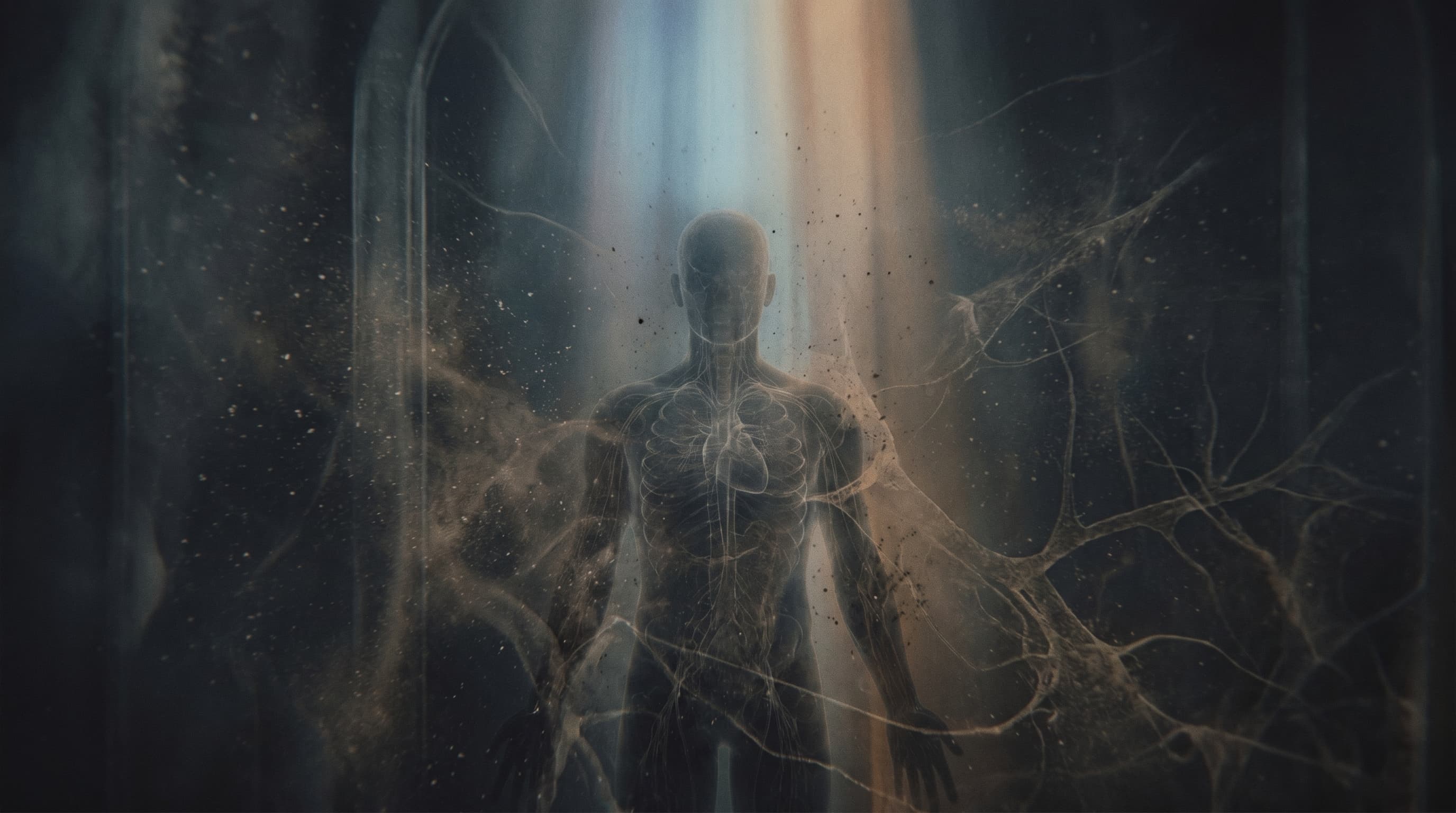
13. Can evolution and Christian faith be reconciled?
The answer depends on what exactly is meant by "reconciled."
If compatibility means: "The Bible must literally match a modern biology textbook," then no, this is impossible and unnecessary.
If it means: "Science must prove the soul, Providence, and the Resurrection," then again, no. That is not its method.
But if the question is: "Can a Christian accept the modern scientific picture of evolution and simultaneously believe in God the Creator, the image of God, sin, and salvation in Christ?" — yes, such a position exists and is being theologically developed.
It requires intellectual honesty. One cannot simply say: "Evolution has explained everything, theology is no longer needed." But neither can one say: "Because the conclusions of genetics are unpleasant to me, genetics must be false."
One must acknowledge the tension. Especially in the questions of Adam, original sin, and death. This is not a bug in the conversation, but its very depth.
14. A practical map for the reader
To avoid getting lost, it is helpful to keep a few distinctions in mind.
- Evolution and atheism are not the same thing. Evolution describes natural processes. Atheism is a philosophical conclusion that some people draw, but which is not part of the biological theory.
- A common ancestor is not a modern monkey. Humans and chimpanzees share common ancestors; they did not descend from one another.
- The randomness of mutations does not mean the randomness of all evolution. Selection, environment, development, and constraints make the process completely unlike a game of pure roulette.
- The origin of life and the evolution of life are different questions. Evolution explains the change and branching of living things after life emerged.
- Science is confident in the overall picture, but argues about the details. Debates about the extended synthesis, epigenetics, or cultural evolution do not cancel out evolution itself.
- The theological difficulty is real. Especially regarding the questions of Adam, the Fall, and death before humanity.
- Genesis is not a laboratory protocol. But this does not mean it can be thrown away as a "myth." It is a profound theological text about humanity, God, the world, trust, freedom, and rupture.
Conclusion: humanity between dust and breath
The evolutionary picture can only humiliate humanity if one assumes in advance that human dignity relies on biological isolation from the rest of the world. But biblical humanity is already created from the dust of the earth. Our greatness does not lie in being disconnected from the earth, but in the fact that the earth within us becomes capable of hearing God.
Science reveals that our bodies have a deep natural history. We are connected to the animal world, to ancient populations, to extinct human lineages, and to the biological fabric of life. This may seem like a blow to pride, but it can also become a school of humility.
Theology reminds us: humanity is not exhausted by its origins. Knowing what the body emerged from does not mean knowing what the person exists for. Genetics can demonstrate kinship, but it cannot measure repentance. Paleontology can describe ancient death, but it cannot replace the hope of resurrection.
The most mature conversation between evolution and Christianity begins where both sides stop playing roles that don't belong to them. Science is not obligated to be theology. Theology is not obligated to be biology. But a human being who seeks truth lives in several dimensions at once: we consist of matter, think in symbols, suffer from death, and ask about God.
That is exactly why the question of evolution is not only a question about the past. It is a question about who we consider ourselves to be right now: a random spark in a cold universe, an animal with an illusion of eternity, the image of God in a becoming world, or a creature that has not yet comprehended its own depth.
Perhaps an honest answer begins not with a slogan, but with silence before a mystery: humanity is taken from the earth, yet turned toward the sky.
Short glossary
Evolution
inheritable changes in populations of organisms over time.
Population
a group of individuals of the same species living and reproducing in a specific area.
Mutation
a change in DNA.
Natural selection
the process by which inheritable traits that improve survival and reproduction in a specific environment become more common.
Genetic drift
random fluctuations in the frequencies of genetic variants within a population, especially noticeable in small groups.
Common ancestor
an ancient population from which various modern lineages descended.
Hominins
the group that includes humans and their extinct relatives after splitting from the chimpanzee lineage.
Homo sapiens
modern humans as a biological species.
Neanderthals
an ancient human lineage that lived in Eurasia and interbred with *Homo sapiens*.
Denisovans
an ancient human lineage known primarily through genetic data and a few physical findings.
Introgression
the transfer of genes from one population or lineage into another through interbreeding.
Population bottleneck
a sharp reduction in population size that leaves a lasting mark on genetic diversity.
Polygenism
the view that humanity descends not from a single first pair, but from a broader population.
Theistic evolution
a theological position according to which God creates the world, operating partly through evolutionary processes.
Evolutionism
a worldview superstructure asserting that evolution excludes God, purpose, the soul, or human spiritual dignity.
Sources and materials to rely on for further editing
The following materials are listed in the English source markdown for further editing.
Preliminary source directions:
- National Academies: materials on evolution, natural selection, and evidence for evolutionary theory.
- Berkeley Understanding Evolution: analysis of common misconceptions about evolution and natural selection.
- Nature: publications on the Jebel Irhoud findings and early *Homo sapiens*.
- Science: studies of ancient DNA and recurring gene flow between *Homo sapiens* and Neanderthals.
- Max Planck Institute for Evolutionary Anthropology: materials on the origins of *Homo sapiens* and ancient DNA.
- Vatican: *Humani generis* by Pius XII and subsequent Catholic documents on creation, evolution, and the human soul.
- Joshua Swamidass: Genealogical Adam and Eve model.
- Denis Alexander: *Homo divinus* model and the Christian understanding of evolution.
- Christopher Southgate: theology of evolutionary suffering and the problem of death before humans.